10 Games You Can Actually Finish a Session Of in 30 Minutes
Updated August 5, 2026
The tightest fit we could verify is Vampire Survivors, where most stages run on a clock and the 30 minute mark is the end of a successful run, as Peter Howell of the University of Portsmouth describes it. The organising idea is session shape: a game qualifies for this list if it reaches a natural stopping point inside about half an hour, loads quickly, and does not charge you anything for standing up. Several games below are dozens of hours long, which is fine. What you are budgeting is the sitting.
| # | Game | Year | Studio | What ends the session |
|---|---|---|---|---|
| 1 | Vampire Survivors | 2022 | poncle | A clock that runs out |
| 2 | Dorfromantik | 2022 | Toukana Interactive | The tile stack empties |
| 3 | ISLANDERS | 2019 | Coatsink, GrizzlyGames, Stage Clear Studios | The building inventory empties |
| 4 | Mini Metro | 2015 | Dinosaur Polo Club | The network fails |
| 5 | Into the Breach | 2018 | Subset Games | An island is secured |
| 6 | Slice & Dice | 2024 | Tann | A run wins or dies |
| 7 | Luck be a Landlord | 2023 | TrampolineTales | Rent gets paid or it does not |
| 8 | Unpacking | 2021 | Witch Beam | A house move finishes |
| 9 | PowerWash Simulator | 2022 | FuturLab | You save and stop |
| 10 | A Short Hike | 2019 | adamgryu | You save and stop |
Studio and year as credited on each game’s Steam store page, checked August 2026.
What makes a game fit a 30 minute session?
Three things, and only one is about length. The game has to produce a stopping point on its own, so you are not the one abandoning something. It has to start fast enough that the first five minutes are not menus. And leaving has to be free, either because it saves where you are or because there is nothing left to lose.
The failure mode is not long games. It is games with an unsaveable middle. A 90 second match that costs you a rank if you quit is worse for a broken half hour than a two hour campaign that autosaves every turn. This is a different axis from our weekend games list, which is about finishing a whole game across a Saturday.
Every percentage below comes from Steam’s own global achievement statistics for that game. Valve does not document which population sits in the denominator, so treat them as a rough shape: 97.8 percent of owners hold the achievement for surviving one minute of Vampire Survivors, which suggests the denominator sits close to people who actually launched it.
Which game ends on a clock?
1. Vampire Survivors
The 30 minute figure here is a rule, written into the game. Most stages run to a fixed clock, and reaching the end of it clears the stage. The achievement list is the cleanest proof: entries like “Survive 30 minutes in Green Acres” (36.7 percent of owners) and “Survive 30 minutes in The Bone Zone” (31.3 percent) mark stage completions. Howell’s write-up adds the uncomfortable part: because 30 minutes is the success line, every run that stops short produces a near miss, the same mechanism casinos rely on. poncle shipped it in October 2022, and it beat Elden Ring and God of War: Ragnarok for Best Game at the 2023 BAFTA Game Awards.
Which games end when the supply runs out?
These are the quietest stops in games. Nothing kills you. You run out of the thing you were placing.
2. Dorfromantik
The stack of tiles in your hand is a session timer that does not tick. Toukana Interactive states the rule flatly on the store page: “The game ends when the tile stack is used up.” Every quest you complete adds tiles back, so a good session extends itself and a weak one ends sooner. The same page offers a mode for exactly this, described as taking “a short break from life in quick mode.”
3. ISLANDERS
A city builder that ends when you run out of buildings, usually before you run out of interest. Scoring depends on what each building sits next to, and points refill your inventory. When the inventory empties and the score is short, that island is over: the store page puts it as “If you run out of buildings the game ends.” The same page is unusually blunt about the trade: beautiful cities “without investing hours on end into stressful resource management.”
4. Mini Metro
The oldest game here and still the sharpest example of a session that ends itself. Dinosaur Polo Club does not promise you will win: “Eventually your network will fail. Stations will open too quickly. Commuters will crowd the platforms.” The modes are described as “Normal for quick scored games, Endless for stress-free sandbox play, and Extreme for the ultimate challenge,” which sorts by how much time you have as much as by how hard you want it. Normal ends when the city beats you. Endless never ends on its own, which is the right pick when you do not know how long you have.
Which games end when a run resolves?
5. Into the Breach
A strategy game whose fail state is a restart, built by a studio that made the restart cheap. The speed is easy to underestimate: the “Lightning War” achievement asks you to finish the first two Corporate Islands in under 30 minutes with the Blitzkrieg squad, and 10.3 percent of owners have done it. That is half of a four island campaign in one sitting. Every enemy attack is telegraphed before it lands, so there is no hidden information to carry between sessions.
6. Slice & Dice
Twenty levels, unlimited undo, and no animation padding. Tann’s store page sets the shape in one line: “Fight your way through 20 levels of monsters and try to take on the final boss,” then warns that “If you lose a single fight you have to start over.” The surprising part for a permadeath roguelike is the next promise: “Undo actions as much as you like.” A distracted misclick cannot cost you the run, which is what makes half an hour of it safe to start.
7. Luck be a Landlord
Each of its twenty apartment floors is a separate, self-contained run. You feed a slot machine, add symbols to it, and try to make rent. Floors are difficulty tiers with their own win conditions, and the statistics show the curve: 59.0 percent of owners have won on floor 1, and 12.4 percent have won on floor 20. Because it resolves spin by spin with no clock running, pausing is the same as looking away. If this run shape appeals, our roguelike deckbuilder list covers the longer end of the genre.
Which games let you stop anywhere?
8. Unpacking
One house move per level, and each move is a natural place to close the laptop. Witch Beam removed the pressure entirely: the store page confirms “no timers, meters or scores” across “eight house moves.” Those eight moves are the session grid. The story arrives through the objects, so stopping never strands you mid scene.
9. PowerWash Simulator
A job can take an hour, but a single wall takes minutes and the game remembers exactly which wall. FuturLab says the important part out loud on the store page: there is “no time pressure or final score.” Progress is tracked per surface, so the unit of accomplishment is far smaller than the unit of content. That is why it works when your thirty minutes are unreliable.
10. A Short Hike
The whole game fits in a couple of sittings, and the summit is a natural halfway stop. adamgryu’s store page states the intent: “Hike at your own pace, there’s no need to rush to the summit!” Slow pacing does not stop people getting to the end: 66.1 percent of owners have reached Hawk Peak and 54.8 percent hold the ending achievement.
Why are Balatro and Slay the Spire not on this list?
Because we could not verify that a typical run of either fits in 30 minutes, and we will not guess. Both measure themselves in rounds, not minutes. Balatro from LocalThunk and Playstack has a “Speedrunner” achievement for winning a run in 12 or fewer rounds, held by 20.1 percent of owners, against 71.8 percent who have won a run at all, so most wins run longer than 12 rounds. Slay the Spire by Mega Crit is more explicit: its “Speed Climber” achievement is “Beat the game in under 20 minutes,” and only 6.7 percent of owners have it. Possible and rare is exactly what disqualifies a game as a reliable half hour.
Both save mid run, so leaving is never punished. It is the first test they fail, the one about producing a stop on their own.
Do 90 percent of players really never finish a game?
This is the statistic everyone reaches for when arguing games should be shorter, and it does not have the source people think. It traces to a 2011 CNN piece by Blake Snow in which Activision production contractor Keith Fuller said: “What I’ve been told as a blanket expectation is that 90 percent of players who start your game will never see the end of it unless they watch a clip on YouTube.” Game Informer’s write-up reproduces the quote in full, and the wording gives it away: this was an expectation Fuller had been told, not data he had collected. The only dataset in the piece came from Raptr, a service measuring its own users, and the write-up notes the article lacked hard numbers to back up some of its claims.
Fifteen years later it still circulates with the authority of a measurement. The achievement pages linked above point the other way: 49.6 percent of Into the Breach owners hold the “Victory” achievement for beating the game, 71.8 percent of Balatro owners have won a run, and 56.2 percent of Slay the Spire owners have beaten it with the Ironclad. Completion rates vary enormously by game shape, and a 2011 rule of thumb should not be doing the work of a study. There is a separate question in why an unfinished game keeps pulling at you anyway, and why a progress bar holds attention better than it produces completion. We took that apart in the psychology of completion.
Where does Grandma Left Me a Building sit in this?
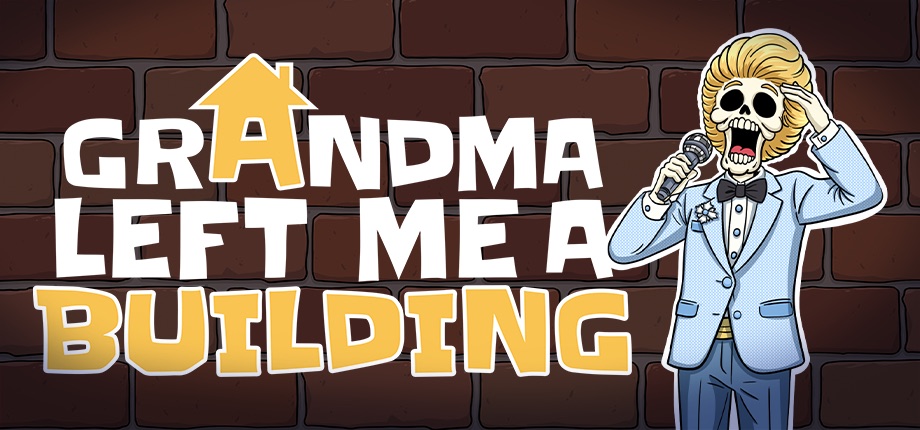
Grandma Left Me a Building is unreleased, so we have no player data and nothing honest to say about how long anyone plays it. What we can say is which test we designed for deliberately. There is no time pressure and you plan at your own pace, so leaving is free by construction: nothing is lost by closing the game halfway through a plan. The smallest complete action is small on purpose, one tenant dragged into one room, and the upgrade system is multi level, so buying a single level closes something even while the track above it stays open.
The test we have not passed is the first one. We have not proved the game produces its own stopping point at a predictable interval, which is harder than removing punishment. With 100+ unexpected events arriving on their own schedule, a session can extend itself the way a Dorfromantik quest does, and that is what we are watching for in playtests. There is more on the underlying choices in how we designed the game.
Frequently asked questions
What is the difference between a short game and a short session?
Total length is how long the whole game takes. Session shape is how easily the game lets you stop. They are independent: PowerWash Simulator has dozens of hours of jobs and near perfect session shape, while a competitive game with five minute matches can be far worse if quitting mid match costs you a rank.
Are roguelikes good for 30 minute sessions?
Only some, and the genre label does not predict which. Vampire Survivors ends runs on a clock and Slice & Dice resolves in 20 levels, so both fit. Slay the Spire does not, given that fewer than 7 percent of owners have ever finished a run in under 20 minutes.
Does saving mid run make a game session friendly on its own?
It helps, and it is not enough on its own. Save anywhere removes the penalty for leaving but produces no stopping point, so you are still the one abandoning something unfinished. The games that survive a broken schedule do both: they save freely and they close a loop for you.
Which of these is best if I get interrupted unpredictably?
PowerWash Simulator and Mini Metro’s Endless mode. The first tracks progress per surface, so any moment is a clean exit. The second never ends on its own, so being pulled away costs nothing.
Key takeaways
- Session shape is the useful axis. A game qualifies if it stops on its own inside about half an hour, loads fast, and makes leaving free.
- The clearest 30 minute rule belongs to Vampire Survivors, where 30 minutes is a stage completion written into the design, confirmed by its own achievement descriptions.
- Running out of pieces is the gentlest stop there is. Dorfromantik ends when the tile stack empties, ISLANDERS when the building inventory empties, and neither is a punishment.
- Popular roguelikes fail on predictability. Balatro and Slay the Spire both save mid run, but a Slay the Spire win under 20 minutes is held by just 6.7 percent of owners.
- The “90 percent never finish a game” figure has no study behind it. It came from a single 2011 interview quote describing an expectation, and several games here sit above 50 percent on Steam’s own completion achievements.
If a building of 30+ odd tenants and no clock sounds like the right shape for your evenings, Grandma Left Me a Building is on Steam here.