What Is a Cozy Game? A Definition and Short History
Updated August 3, 2026
A cozy game is a game built to feel safe, gentle, and low-stakes: it emphasizes relaxation over competition, usually avoids violence, and rarely punishes you for slowing down. Designers tend to describe it through three qualities, safety, abundance, and softness, rather than any single mechanic or art style. Here is where I land: what counts, what does not, and where the word came from.
Last updated August 2026.
What counts as a cozy game?
The most useful definition comes from game designer Daniel Cook, whose 2018 Lost Garden essay Cozy Games, written with a group of other designers, framed coziness as the fantasy of safety, abundance, and softness. Safety means risk and threat are minimized, so you can play without fear of a sudden loss. Abundance means your basic needs are met, which leaves room to tend relationships, decorate, or simply enjoy the space. Softness means the stimuli stay gentle: slow tempo, warm sound, manageable scope. When a game leans on all three, it usually reads as cozy even when the surface looks unusual. Those pillars also explain the calm many players report, which I dug into in the psychology of why cozy games relax us, and they hold even when the game asks you to think hard.
Coziness is about the emotional register; deep decisions are welcome. Plenty of cozy games ask you to plan, optimize, and juggle several systems at once, and that planning is part of the comfort rather than a break from it.
Where did the term “cozy game” come from?
“Cozy game” started as a community label rather than an industry genre. One of the earliest widely-cited uses of the exact phrase is a 2016 r/patientgamers Reddit thread asking for the “most comfy/cozy game you’ve played.” The idea circulated through the 2010s and gained real traction in the early 2020s, when the COVID-19 pandemic pushed players toward comforting games. Two releases anchor the timeline: Stardew Valley (2016) and Animal Crossing: New Horizons (2020). Some developers have traced the sensibility further back, to Little Computer People (1985) and The Sims (2000).
Because it grew as a community and marketing label rather than a formal taxonomy, the edges stay fuzzy, and that is fine. The word points at a feeling first, and the feeling is what different players are agreeing on.
Do cozy games have to be easy?
No. Cozy describes the emotional register, and difficulty varies widely across the label. Failure is soft here; there is no game-over screen with a body count. A cozy game can still hand you a full economy, a deck to build, or a town to keep afloat, and you can still botch a harvest or run low on money. What stays constant is the low threat and the freedom to recover at your own speed. The label has stretched as the audience has grown, something I looked at with the Steam data on the cozy genre’s growth.
Do cozy games all look the same?
Aesthetics are a signal, not a guarantee. Pastel palettes, round shapes, and soft light are common shorthand, but a “dark cozy” strand shows the feeling can survive a gothic coat of paint, from the muted dread of Don’t Starve to the calmer stretches of Darkest Dungeon-adjacent games. The umbrella is emotional, so wildly different mechanics and styles fit under it. A pretty screenshot suggests coziness; the safety, abundance, and softness underneath are what confirm it.
What are some clear examples of cozy games?
New to the genre? Start with the gentle on-ramps I ranked in cozy games for beginners. A few well-known reference points:
| Game | Year | What you do | Which pillar it leans on (safety / abundance / softness) |
|---|---|---|---|
| Stardew Valley | 2016 | farming, fishing, and slow-building town relationships | Abundance: needs met, so there is room to tend relationships |
| Animal Crossing: New Horizons | 2020 | island life with no clock to beat | Safety: no clock to beat, so no fear of a sudden loss |
| Unpacking | 2021 | unpacking boxes into rooms, zero combat, a quiet life story | Safety and softness: zero combat, a quiet story |
| A Short Hike | 2019 | gentle exploration you can finish in an evening | Softness: gentle, and a scope you can manage in an evening |
| Spiritfarer | 2020 | management and caretaking with grief woven through it | Abundance: caretaking is the loop, even with grief in it |
| Dorfromantik | 2022 | calm, meditative tile placement | Softness: calm, meditative, slow tempo |
The list keeps growing because the genre keeps widening, and the weirder corners of it are half the fun, which is why we like the strange NPCs cozy games invent.
Where does Grandma Left Me a Building fit?
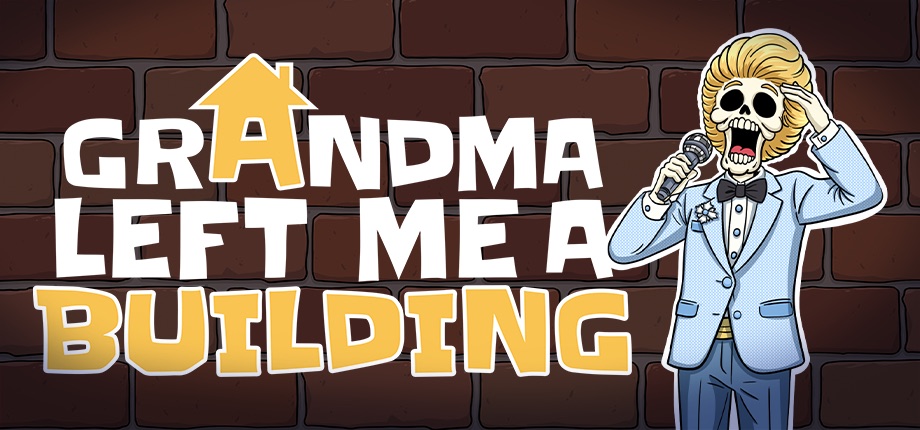
We make one, so here is the caveat up front: Grandma Left Me a Building is our debut and still in development, so I am describing intent rather than a shipped product. It borrows the cozy register, warm hand-drawn cartoon art, an orange, yellow and cream palette, and calm lo-fi music, with no time pressure so you can plan at your own pace. From there it leans into comedy and chaos as your building grows, and it keeps a real economy of money, happiness, and reputation, so the stakes are genuine even when the mood stays warm. You can read more on the Grandma Left Me a Building press page or wishlist it on Steam.
Frequently asked questions
Is Minecraft a cozy game?
No, not by default. Minecraft survival puts threat and loss on the table, which is exactly what the safety pillar rules out. Turn the threats off and build in a quiet world, though, and it passes the same three-part test any cozy game does.
What is the difference between a cozy game and a casual game?
Casual describes how much a game asks of you; cozy describes how it feels while it asks. A casual game is light by design. A cozy game can run a full economy and still count, as long as the threat stays low.
Are cozy games always single-player?
No. Nothing in safety, abundance, or softness sets a player count, so the label covers solo and shared play alike. What breaks coziness is pressure and competition, not a second person, which is why calm co-op sits comfortably under the same umbrella.
TL;DR
- A cozy game emphasizes safety, abundance, and softness over challenge or competition.
- It usually avoids violence and high-pressure failure, but it can still be deep and strategic.
- The term grew from community use (an early 2016 Reddit thread) and took off in the early 2020s, boosted by Stardew Valley, Animal Crossing: New Horizons, and pandemic-era demand.
- The look (pastels, round shapes) is a common signal, but the feeling underneath is what defines the genre.