Why Hand-Drawn Games Are Beating AAA Graphics
Updated August 3, 2026
Hand-drawn games keep winning a fight they should lose on paper. Photorealism costs hundreds of millions of dollars and starts aging the day it ships. A strong hand-drawn style costs a fraction of that, reads instantly in a single screenshot, and can look the same in twenty years. Cuphead, Hollow Knight, Hades, and Gris are the evidence.
Why do hand-drawn games stand out against photorealism?
Because realism converges and style diverges. Every studio chasing photorealism is chasing the same target: accurate skin, ray-traced light, motion-captured faces. The closer they get, the more their games look like each other. A hand-drawn game has the opposite property. Nobody mistakes a Cuphead screenshot for any other game. Studio MDHR animated it the way 1930s cartoons were made, frame by frame, and that one choice is the first thing anyone mentions about the game. Studio MDHR announced a million copies sold within two weeks of its September 2017 launch, and has reported sales in the millions since.
On a storefront where players scroll past hundreds of capsule images, a distinct style is not decoration. It is the marketing. Photorealism can be impressive, but it is rarely identifiable, and identifiable is what gets a small game noticed at all.
What does photorealism actually cost?
The leaked Insomniac Games documents from December 2023, reported by Forbes and Kotaku, put the budget of Marvel’s Spider-Man 2 at roughly 300 million dollars, with more than 40 million of that spent on cinematics alone. Internal projections had the game needing about 7.2 million full-price copies just to break even, and one presentation set a goal of keeping future AAA games under 350 million dollars. Those readings of the leak come from Paul Tassi at Forbes and from Kotaku’s walkthrough of the hacked files.
Compare Hollow Knight. Team Cherry, a three-person team in Adelaide, told Jason Schreier at Bloomberg in August 2025 that the game has sold around 15 million units. That is more than double Spider-Man 2’s break-even line, from a team that fits in one car.
| Game | Team size | Reported budget | Units sold | Source |
|---|---|---|---|---|
| Marvel’s Spider-Man 2 | unannounced | About 300 million dollars, needing 7.2 million full-price copies to break even | 10.5 million projected in the leak, no sold total announced | Leaked Insomniac Games documents, December 2023, reported by Forbes and Kotaku |
| Hollow Knight | 3 people | unannounced | Around 15 million | Team Cherry, to Bloomberg, 2025 |
| Cuphead | unannounced | unannounced | 1 million in the first two weeks | Studio MDHR, 2017 |
| Gris | unannounced | unannounced | 3 million | Nomada Studio, 2024 |
| Spiritfarer | unannounced | unannounced | 1 million | Thunder Lotus, 2021 |
Every units-sold figure above is a developer announcement from the year in the Source column, not a live count. The Spider-Man 2 figure is the only exception: it is a projection inside the leaked documents, not a sale. Indie budgets are marked unannounced because none of these studios has published one.
None of this makes hand-drawn art free. Cuphead’s frame-by-frame animation took Studio MDHR years of labor, and every asset in a hand-drawn game is skilled human hours. The difference is where the money goes: technology versus craft. Craft scales down to a small team’s budget. A photorealistic open world never will.
Why does stylized art age better?
Realism is graded against reality, and reality never stops raising the bar. Each hardware generation makes the previous generation’s realistic faces look slightly wrong, which is why so many prestige games from ten years ago now read as dated. Stylized art is graded against its own rules instead. The Wind Waker’s cel-shaded look, first released in 2002, still reads as clean and intentional today, while most realism-chasing games of that era are hard to look at.
Gris makes the same point in watercolor. Nomada Studio released it in December 2018, and its painted frames will look identical in 2038 because there was never a technical target they were approximating. In September 2024, Nomada Studio announced the game had passed three million copies, nearly six years after release.
Hades holds up the same way. Supergiant Games ships hand-painted character art, and at the 2021 BAFTA Games Awards the game took both Best Game and Artistic Achievement, two of the five wins Game Developer counted for it that night.
Where does hand-drawn art win during actual play?
Style also does mechanical work. Hollow Knight’s enemies are strong dark silhouettes on muted backgrounds, so an attack cue reads in a fraction of a second even in a crowded room. Hades keeps a dozen effects readable at once because its characters are drawn with bold shapes and high contrast rather than simulated materials. Thunder Lotus announced that Spiritfarer, its hand-drawn management game about ferrying spirits, passed a million copies by late 2021. Its animation also carries the game’s emotional weight: a drawn hug can be exaggerated in ways a motion-captured one cannot.
That is the shared pattern across these games: hand-drawn art gets to exaggerate. Exaggeration is what makes a pose readable, a personality visible at a glance, and a face expressive without sliding into the uncanny valley. Realism gives all of that up in exchange for fidelity.
Doesn’t photorealism sell better?
At the top of the market, yes. The same leaked documents projected Spider-Man 2 at 10.5 million units, and photorealism buys spectacle nothing else can: swinging through a one-to-one Manhattan works because the city looks real. For a studio with an established franchise, a marketing machine, and a nine-figure budget, realism is a rational bet. It demos well in trailers and it sells consoles.
The problem is who can place that bet. Insomniac’s own leaked presentations treat 350 million dollars as a ceiling to fight for. Maybe a few dozen studios on earth can play that game. For everyone else, chasing realism means competing against 300 million dollars with a rounding error of that budget, in the one dimension where money wins directly. A distinct style is the dimension where it does not.
How does this shape our own game?
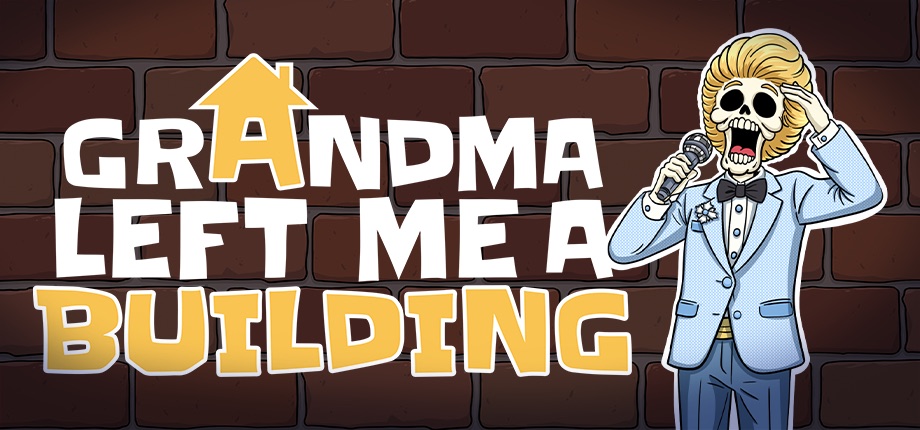
We picked this tradeoff on purpose. Overbaked Studio is a small independent studio in Istanbul, and our upcoming cozy apartment management sim, Grandma Left Me a Building, uses hand-drawn cartoon art for the reasons above. Our 2D artist, Berkay Özer, draws every tenant individually: the game has more than 30 unique tenants across 4 social tiers, with over 300 character interactions between them. Cartoon exaggeration is what keeps each tenant recognizable at management-view zoom, where realistic proportions would blur together.
We wrote about the character-first thinking behind that in how we designed Grandma Left Me a Building, and about why odd, specific characters carry cozy games in the weirdest NPCs in cozy games.
The cost is real, too. Every new tenant is drawing hours, and that shows up in the schedule, something we covered in how long it takes to make an indie game. We think the trade is worth it: nobody else’s building will ever look like ours.
Frequently asked questions
Is hand-drawn art cheaper to make than 3D?
No, not across the board. It saves the technology bill: no photoscanning, no motion capture, no render pipeline chasing the newest hardware. It does not save labor. Every drawn frame is an artist hour, and that cost grows with every character you add.
Do hand-drawn indie games actually sell?
Yes. Team Cherry put Hollow Knight at around 15 million units in 2025, Nomada Studio put Gris at 3 million in 2024, and Thunder Lotus put Spiritfarer at 1 million in 2021. None of those teams had a photorealism budget.
Which hand-drawn game sold the most?
Hollow Knight, at around 15 million units, of the games covered in this post. Gris follows at 3 million and Spiritfarer at 1 million. Each figure is a developer announcement from a different year, so treat the ranking as a snapshot, not a live scoreboard.
Key takeaways
- Realism converges, style diverges: a hand-drawn look is identifiable in one screenshot, which matters more to a small game than fidelity.
- The cost gap is stark. Leaked documents put Marvel’s Spider-Man 2 at roughly 300 million dollars; three-person Team Cherry’s Hollow Knight has sold around 15 million units.
- Stylized art ages on its own terms: Gris (2018) passed 3 million copies nearly six years after release, and The Wind Waker still reads clean after two decades.
- Hand-drawn art plays better, too. Strong silhouettes keep Hollow Knight and Hades readable in chaos, and exaggerated animation lets Spiritfarer carry emotion.
- Photorealism does sell, but only at a scale a few dozen studios can afford. For everyone else it is the wrong fight.
- Grandma Left Me a Building leans into this: one artist hand-draws all 30+ tenants so every character stays distinct.
If hand-drawn characters are your thing, you can wishlist Grandma Left Me a Building on Steam and follow its art as it takes shape on the press page.