Why Do We Get Attached to Game Characters?
Updated August 3, 2026
You get attached to game characters because your brain treats repeated, responsive social contact as real, even when the other party is fictional. Psychologists have studied this since 1956, and modern peer-reviewed work on games shows the bond is genuine and measurable, and that it grows strongest when a character remembers you, reacts to you, and needs something from you.
What is a parasocial relationship?
A parasocial relationship is a one-sided emotional bond with a media figure who does not know you exist, first described by Horton and Wohl in 1956.
In 1956, Donald Horton and R. Richard Wohl published “Mass Communication and Para-Social Interaction” in the journal Psychiatry. They had noticed something odd about radio and television: audiences responded to performers as if they knew them personally, a pattern the authors called “intimacy at a distance.” The performer talks into the camera night after night, and the viewer builds a one-sided bond, a parasocial one, that feels a lot like friendship even though the performer has no idea the viewer exists.
That 70-year-old paper is still the foundation for how researchers think about our bonds with fictional and mediated people. Games, though, complicate it in a useful way. A talk show host cannot respond to you. A well-built NPC can, at least within the boundaries a designer drew. That one difference is why game characters can pull harder than television ever did.
What does research say about attachment to game characters?
Four peer-reviewed studies map the territory well.
| Study | Year | Journal or venue | Sample | Key finding |
|---|---|---|---|---|
| Lewis, Weber and Bowman, “They May Be Pixels, But They’re MY Pixels” | 2008 | CyberPsychology & Behavior | Not stated in this post | Attachment splits into four measurable parts: identifying with a character, suspending disbelief, feeling in control, feeling responsible for the character’s needs. Higher attachment predicted higher enjoyment and more hours played. |
| Coulson and colleagues | 2012 | Psychology of Popular Media Culture | 74 Dragon Age: Origins players, asked about the game’s ten companions | Players form “real and authentic emotional attachments” to virtual characters, shaped by the player’s own personality and by how friendly, useful and attractive the companion is. |
| Bopp and colleagues | 2019 | CHI PLAY | 213 players, each asked about a character they were particularly fond of | Seven distinct flavors of attachment, from admiring a character as a role model to genuinely worrying about their well-being. |
| Burgess and Jones, “I harbour strong feelings for Tali despite her being a fictional character” | 2020 | Game Studies | 38,221 BioWare forum replies about Mass Effect’s Tali, 31,802 about Garrus | Players described merging their own feelings with their Shepard’s, and some customized their armor to match a favorite squadmate. |
In 2008, Melissa Lewis, Rene Weber and Nicholas Bowman published a character attachment scale in CyberPsychology & Behavior under a memorable title: “They May Be Pixels, But They’re MY Pixels.” They broke attachment into four measurable parts: identifying with a character, suspending disbelief, feeling in control of the character’s actions, and feeling responsible for the character’s needs. Higher attachment predicted higher enjoyment and more hours played.
In 2012, Mark Coulson and colleagues surveyed 74 Dragon Age: Origins players about the game’s ten companions, in Psychology of Popular Media Culture. Their conclusion: players form “real and authentic emotional attachments” to virtual characters, shaped both by the player’s own personality and by how friendly, useful and attractive the companion is.
In 2019, Julia Bopp and colleagues asked 213 players about a game character they were particularly fond of, for a CHI PLAY paper. They found seven distinct flavors of attachment, ranging from admiring a character as a role model to genuinely worrying about their well-being.
And in 2020, Jacqueline Burgess and Christian Jones analyzed BioWare forum threads for the journal Game Studies: 38,221 replies about Mass Effect’s Tali, 31,802 about Garrus. Players described merging their own feelings with their Shepard’s, and some customized their armor to match a favorite squadmate. The paper’s title is a direct player quote: “I harbour strong feelings for Tali despite her being a fictional character.”
Why do game NPCs hit harder than TV characters?
Interactivity turns the parasocial one-way street into a feedback loop, and three levers do most of the work.
Responsiveness. A television character cannot notice you. An NPC reacts to what you did: the gift you chose, the dialogue option you picked, the quest you finished. Every reaction is evidence, however thin, that the relationship runs in both directions.
Memory. Friendship meters, approval scores and unlocked scenes persist between sessions. The relationship has a state, and the state grows, which is exactly what a real relationship does and a rewatched TV episode does not.
Care work. Lewis, Weber and Bowman’s fourth component, responsibility for a character’s needs, is the lever cozy and management games use best. Effort deepens the bond: Michael Norton, Daniel Mochon and Dan Ariely showed in 2012 that people value things more when they put labor into them, naming it the IKEA effect after self-assembled furniture. Feeding, housing and cheering up a character is that same labor, aimed at a person.
This is a separate mechanism from why the genre calms you down, which we unpacked in why cozy games are so relaxing, but the two stack: a low-stress world leaves your attention free for the people living in it.
Which NPCs do players actually bond with?
Stardew Valley (ConcernedApe, 2016). Every villager has individual gift preferences, a weekly schedule and heart events that unlock as friendship deepens. Learning which dish a specific villager loves takes effort, and effort compounds into caring.
Animal Crossing: New Horizons (Nintendo, 2020). Villagers draw from eight personality types and mostly make small talk, yet players agonize over one moving away. Daily low-stakes contact is doing the work here: the same repeated exposure Horton and Wohl saw in 1950s television, now with your name in its mouth.
Mass Effect (BioWare, 2007 to 2012). Squadmates fight beside you, comment on your choices and can die because of them. The Burgess and Jones forum data above shows where that leads.
Hades (Supergiant Games, 2020). An enormous amount of recorded dialogue, much of it there so characters can acknowledge exactly what just happened to you: your last death, your last gift, your last conversation.
Attachment also has a stranger cousin: some characters stick purely because they are odd. We collected those in the weirdest NPCs in cozy games, a much less serious read than this one.
How are we designing our tenants for attachment?
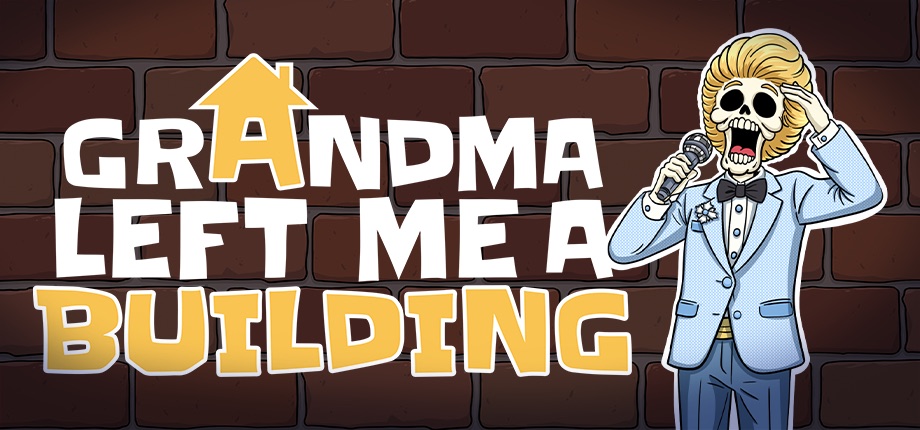
We are a small independent studio in Istanbul building Grandma Left Me a Building, an unreleased cozy apartment management sim where you inherit a building full of tenants. The research above is not decoration for us, it is close to a checklist.
The tenant system is trait-based: more than 30 unique tenants across four social tiers, each with traits, likes and dislikes that drive over 300 character interactions. An opera singer bursts into arias in the elevator. A philosopher answers everything with “but why?”. An eight-year-old takes things apart and reassembles them correctly about 20 percent of the time. Each of those specifics is an attachment lever placed on purpose: a distinct personality to recognize, preferences to learn, needs to feel responsible for.
The caveat we owe you: the game is unreleased, so nobody outside the studio has bonded with these tenants yet. We designed for attachment; whether players actually feel it is a result only launch can deliver. If you want the longer story of how the cast came together, we wrote it up in how we designed Grandma Left Me a Building, and the full feature list lives on the press page.
Frequently asked questions
Is it normal to get attached to a video game character?
Yes. Researchers have measured this bond in hundreds of ordinary players and treat it as a standard response to repeated social contact, not a quirk. If a cast reacts to you week after week, feeling something back is what the psychology predicts.
Why do I cry when a game character dies?
Because you maintained that relationship instead of watching it. Hours of small choices, gifts and rescues put your own labor into the character, and one of the four attachment components researchers measure is exactly that felt responsibility for someone’s needs.
What makes players bond with an NPC?
Three levers, mostly: a character who reacts to what you did, a relationship whose state carries over between sessions, and a need you can only meet by putting in work. Distinct personalities and learnable preferences make each of those levers easier to feel.
Key takeaways
- Parasocial relationships were first described by Horton and Wohl in 1956: one-sided bonds with media figures that feel like friendship.
- Peer-reviewed studies (Lewis, Weber and Bowman, 2008; Coulson et al., 2012; Bopp et al., 2019; Burgess and Jones, 2020) show attachment to game characters is real, measurable and tied to enjoyment.
- Games outdo television at this because NPCs respond, remember and need you.
- The strongest design levers: distinct personality, learnable preferences, persistent relationship state and a reason to care for someone.
- We apply these levers deliberately in Grandma Left Me a Building’s trait-based tenant system, and players will be the judges of whether they work.
If watching an opera singer feud with a philosopher in an elevator sounds like your kind of attachment experiment, you can wishlist Grandma Left Me a Building on Steam.