Inheritance Games: Why We Start With a Ruin
Updated August 3, 2026
Games love handing you an inheritance because it is the fastest way to make a place matter. Stardew Valley starts you on your late grandfather’s overgrown farm. Wylde Flowers gives you your grandmother’s farm, along with her secret coven. My Time at Portia leaves you your absent father’s rusted-out workshop. And our own game hands you your grandmother’s crumbling building. The gift is always the same shape: someone who loved you left you something broken, and now it is yours to bring back.
Why do so many games open with an inheritance?
An inheritance solves a storytelling problem in a single line. A brand-new place is a blank slate with no reason to care about it, and a place you bought is just a transaction. But a place someone left you arrives pre-loaded with history, obligation, and a name attached. You are fixing a farm and honoring the person who kept it before you at the same time. That framing quietly turns chores into meaning: every mended fence and replanted field becomes a small act of remembrance, which is why the trope keeps showing up in genres that otherwise have nothing in common.
| Game | Year | What you inherit | Who left it |
|---|---|---|---|
| Stardew Valley | 2016 | An overgrown farm | Grandfather |
| Wylde Flowers | 2022 | A farm and a coven | Grandmother Hazel |
| My Time at Portia | 2019 | A builder’s workshop and handbook | Absent father |
| Spiritfarer | 2020 | The Spiritfarer’s duty | Charon |
| Grandma Left Me a Building | in development, ours | A run-down apartment building | Grandmother |
Years are Steam release dates as of August 2026. Spiritfarer is listed on Steam as Spiritfarer: Farewell Edition, a later edition of the 2020 original.
The games that hand you a ruin
Stardew Valley (2016): your grandfather’s farm
The genre’s touchstone opens with a letter meant to be read after he is gone. In Stardew Valley, your grandfather leaves you his overgrown farm at the edge of Pelican Town, and you trade a soulless office job for the slow work of bringing it back. The farm is a wreck by design: the game needs you to have somewhere to climb from, and your grandfather’s memory is what gives the climb a point.
Wylde Flowers (2022): your grandmother, the witch
Wylde Flowers takes the same idea somewhere stranger and sadder. After losing her job and her relationship in one week, Tara Wylde moves from the city to the island village of Fairhaven to care for her ailing grandmother Hazel and help on the farm. Soon after she arrives, she learns that Hazel is a witch, and that she is one too. When Hazel dies not long after, she leaves Tara the land and the coven both. Here you watch the loss happen rather than starting the game after it.
My Time at Portia (2019): your father’s workshop
Not every inheritance is a farm. My Time at Portia hands you your absent father’s abandoned builder’s workshop in a bright, half-rebuilt world, along with his old handbook. You inherit a trade and a local reputation to live up to, and the game is the long process of turning a derelict shed back into the workshop your father was once known for.
Spiritfarer (2020): you inherit a duty, not a deed
Spiritfarer is the outlier here, and the most moving. You play Stella, who takes over from Charon as the Spiritfarer, the one who ferries the dead toward their final rest. What passes to you is a job, and the job is grief itself: you build a boat-home for spirits and then, one by one, say goodbye to them. Spiritfarer is the clearest sign the trope was never really about property.
What do you actually inherit in these games?
Look at what these openings share: the thing you are left is always broken. Nobody inherits a thriving farm or a finished shop, because a finished place has no game left in it. The inheritance is really a to-do list with feelings attached. You are handed a wreck and a reason to care about the wreck, and the whole experience lives in the slow, satisfying distance between the two. That is also why these games tend to feel calm rather than tense: the pressure is internal, a quiet wish to do right by what you were left, with no clock counting down and no enemy at the gate.
Frequently asked questions
Which cozy games start with an inherited farm?
Two stand out: Stardew Valley (2016) and Wylde Flowers (2022), both of which open on a relative’s neglected land. My Time at Portia (2019) runs the same idea with a workshop instead of fields, so an inherited opening does not have to mean farming.
Why is the inherited place always run-down?
Because a working farm would leave you nothing to do. The wreck sets a low starting point on purpose, and it gives every repair two meanings at once: visible progress for you, and a small debt paid back to whoever left it.
Is Spiritfarer an inheritance game?
Yes, even though no property changes hands. Stella takes over Charon’s role ferrying the dead, so what she is left is a duty and a set of goodbyes rather than a deed, which is why it belongs next to the farm openings.
Which brings us to a certain building
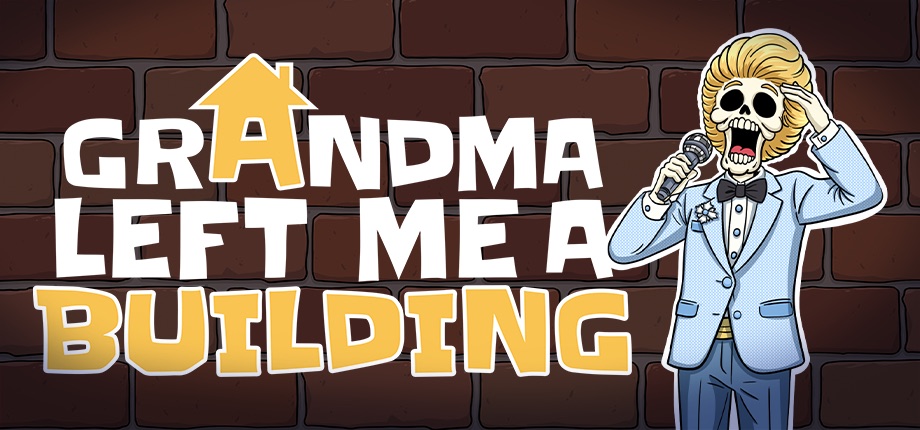
We are making an inheritance game too, and we chose the most literal version of the trope on purpose. In Grandma Left Me a Building, your grandmother leaves you a run-down apartment building full of leaks, odd noises, and eventually a cast of very strange tenants. You patch it up, keep mismatched tenants from clashing, and slowly turn the wreck into a home at your own pace, with no time pressure hurrying you along. This is the oldest opening in cozy games, and we love it for a simple reason: a place someone left you is a place you cannot help but care about.
If you want more in this vein, here are the most anticipated cozy games coming in 2026, several of which begin exactly this way, and if you are curious why these calm games work on us at all, here is the psychology of why cozy games feel so relaxing. Grandma Left Me a Building is still in development, and you can wishlist it on Steam.