How Long Does It Take to Make an Indie Game?
Updated August 3, 2026
Last verified: August 2026.
There is no single number, but most indie games take between one and five years to make, and plenty of well-known ones took longer. Stardew Valley took Eric Barone about four and a half years working solo. Cuphead took StudioMDHR roughly seven. Hollow Knight took Team Cherry around three. The real answer is a range, not a single date, and it depends on scope, team size, and how the team works.
How long does it take to make an indie game?
| Game | Team | Dev time | Shipped |
|---|---|---|---|
| Stardew Valley | Eric Barone, solo | About 4.5 years | 2016 |
| Cuphead | StudioMDHR | About 7 years | 2017 |
| Hollow Knight | Team Cherry | About 3 to 4 years | 2017 |
The honest answer is a spread of years, not a fixed figure. Three commercial indie hits show how wide that spread is:
- Stardew Valley shipped in 2016 after Eric Barone spent about four and a half years on it. He was the sole designer, programmer, artist, composer, and writer (Wikipedia).
- Cuphead shipped in 2017. StudioMDHR founders Chad and Jared Moldenhauer had started on it around 2010, so the full cycle ran close to seven years (GamesRadar+).
- Hollow Knight shipped in February 2017, about two and a half years after its late-2014 Kickstarter and three to four years into total development, built by the small Team Cherry (Wikipedia).
So a first-time solo dev and a small studio can both land in the multi-year range, and none of these were quick. A tiny arcade game or a game-jam project can be finished in weeks, but a polished, commercial indie release almost never is.
Why do indie games take so long?
Two forces stretch the timeline: scope and team size. They compound each other.
Scope grows as the game gets good. Team Cherry has said the long Hollow Knight cycle came from the small team and how much they kept adding, with the sheer amount of the world becoming the hard part rather than any one feature. Cuphead started as a smaller boss-rush game, and after its 2015 reveal the team expanded the scope dramatically. The brothers remortgaged their houses to finish it, quoting Chad Moldenhauer: “we quit our jobs, remortgaged our houses and began expanding the team” (GamesRadar+).
Small teams are the other half. When one or two people cover code, art, sound, design, and marketing, everything runs in series instead of parallel. Barone worked full time, roughly ten hours a day, seven days a week, for four and a half years to hold that solo pace (Game Developer). That is why a two-person studio and a two-hundred-person studio can take similar wall-clock time for very different games.
What makes one indie game faster or slower than another?
Four variables move the number more than anything else:
- Team size. More hands let art, code, and audio progress at once. A solo dev does them one after another.
- Hours. A full-time studio and a nights-and-weekends hobby project can both be “in development” for two years and be nowhere near the same amount of finished work.
- Scope. A tight, single-mechanic game ships far sooner than a sprawling world with hundreds of interactions and events.
- Experience and tools. A first game means learning the engine, the pipeline, and shipping itself. A studio’s second game reuses hard-won systems.
This is why “how long does it take” has no clean answer. Change any one variable and the estimate moves by years.
How long is Grandma Left Me a Building taking?
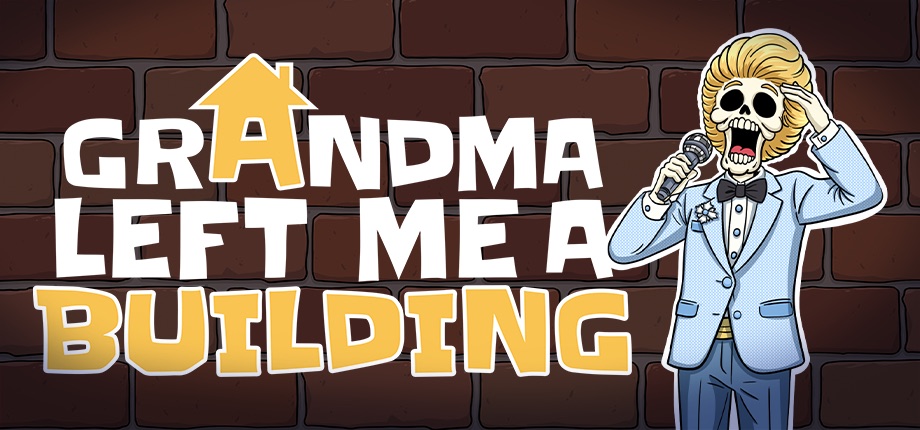
I will give the honest version rather than a marketing one. Grandma Left Me a Building, our debut at Overbaked Studio, is a cozy, comic, chaotic apartment-management sim, and it is still in development, built by a small independent team in Istanbul. It is a large game by our standards: more than 30 tenants across four social tiers, over 300 character interactions, 100-plus unexpected events, and 20-plus building upgrades, all wired into a turn-based day loop.
I am not going to put a public release date on it here, because I will not put a date on it that I cannot stand behind. What I can say is that the scope above is exactly the kind of thing that stretches an indie timeline, and we would rather ship it right than ship it early. If that sounds like your kind of game, the most useful thing you can do is wishlist Grandma Left Me a Building on Steam and follow along. You can read more about the game on its press page, see how the world came together in our design devlog, or browse other cozy games worth waiting for in 2026.
Frequently asked questions
How long did Stardew Valley take?
About four and a half years, working alone. Eric Barone handled design, code, art, music and writing himself, at something close to ten-hour days all week, so the wall-clock figure and the amount of work inside it are two different measurements.
Can one person make a game in a year?
Yes, if the game is small and built around one mechanic. A commercial-scale solo project with a large world and hundreds of interactions is a different animal, and one year is almost never enough for that.
How long does a first indie game take?
Usually one to five years, and longer than the same team’s second game. A debut pays for learning the engine, inventing a pipeline and finding out what shipping involves, and the second game inherits that work instead of repeating it.
Key takeaways
- Expect a range of years. Most commercial indie games take one to five years, and standout titles like Cuphead ran close to seven. Treat any single date with skepticism.
- Scope and team size drive the number. Adding content and working with few hands both stretch the calendar, and together they compound.
- Full-time and part-time are not comparable. Two years of daily full-time work is a different game from two years of evenings.
- Honest studios rarely promise a hard date early. Ours included: Grandma Left Me a Building is in development, and we will announce a date when we can keep it.
If you are hunting for more unreleased indies to follow, here are under-the-radar Steam games worth wishlisting now.