Why Nostalgia Works So Well in Video Games
Updated August 5, 2026
Nostalgia is a repair mechanism: it arrives when you feel lonely or low, and hands back a memory that puts you at the centre of a scene with the people who mattered, weighted more positive than negative. Every part of that sentence comes from seven studies published in the Journal of Personality and Social Psychology in 2006, which coded what nostalgic memories contain and what sets them off (Wildschut, Sedikides, Arndt and Routledge, 2006). Games that recreate those conditions get the effect. Games that only recreate old pixels often do not.
Why was nostalgia once classified as a disease?
The word is not ancient. It was coined in 1688 by the Swiss physician Johannes Hofer, who studied Swiss mercenaries serving abroad and concluded that nostalgia was “a cerebral disease” caused by “the quite continuous vibration of animal spirits through those fibers of the middle brain in which impressed traces of ideas of the Fatherland still cling”. His contemporary J. J. Scheuchzer blamed atmospheric pressure driving blood from the heart to the brain. Some military physicians blamed the unremitting clanging of Alpine cowbells damaging the eardrum and brain. All three explanations appear in the 2006 paper’s history section.
The diagnosis did not fade quickly. By the early 19th century nostalgia had been reclassified as a form of melancholia, and it stayed among the psychological disorders for most of the 20th century, described in the psychodynamic literature as an “immigrant psychosis” (Frost, 1938) and a “mentally repressive compulsive disorder” (Fodor, 1950). It also killed people on paper. Drawing on the Medical and Surgical History of the War of the Rebellion (1888), historian David Anderson of Swansea University reports 5,213 recorded cases of nostalgia and 58 deaths among white Union soldiers.
What did the research actually find?
The first study in the 2006 paper is unusually literal. The researchers coded 42 autobiographical narratives from issues 24 to 27 of a periodical called Nostalgia, published across 1998 and 1999. The writer appeared in a major role in 88 percent of them. Redemption sequences, where a story starts badly and ends well, appeared in 67 percent, against 29 percent for contamination sequences running the other way. Later studies in the same paper named negative mood and loneliness as the triggers, and showed nostalgia strengthening social bonds and positive self-regard.
The loneliness result was tested directly two years later. Four studies in Psychological Science found that loneliness reduced perceived social support but increased nostalgia, and nostalgia then increased perceived social support. The concept also survives translation, with 1,704 students in 18 countries across five continents rating 35 candidate features and agreeing closely on which ones are central. Nostalgia also points forward: six studies in Personality and Social Psychology Bulletin found that recalling a nostalgic experience increased inspiration, including inspiration to go and do exploratory things.
Where does the popular understanding of nostalgia go wrong?
In two places. The first is a straight reversal of cause and effect. For three centuries nostalgia was blamed for the distress around it. Sedikides and Wildschut call this an inferential error: discomfort triggers nostalgia, and nostalgia then buffers the person against it (Emotion Review, 2024). Nostalgic people are not sad because they are nostalgic. They were already struggling, and the memory arrived as a response.
The second is the brain scan. “Nostalgia lights up the reward system” rests on a thinner literature than that phrasing suggests. The study usually pointed to found co-activation of the hippocampus, the substantia nigra and ventral tegmental area, and the ventral striatum while people viewed childhood related images (Oba et al., 2016). Its participants were 14 healthy women. A later review counted only six studies examining nostalgia’s neural basis directly, and the four fMRI ones it tabulated ran on samples of 10 to 16 people, and its authors state that they leaned on reverse inference and that the studies generally did not control for stimulus valence. Memory and reward regions are active together during nostalgia. That is all it shows.
Why do warm colours and cold weather matter?
This is the finding we would hand to an art director first. Five studies in Emotion found that cold days and cold rooms increased nostalgia, and that recalling a nostalgic event made people judge the ambient temperature as warmer and tolerate painful cold for longer than an ordinary memory did. The link runs in both directions and is measurable in degrees and in pain tolerance.
That is a better argument for a warm palette than “warm colours feel nice”. Amber lamplight, a fire, rain on the outside of a window: cold is the condition those studies manipulated, and warmth is what the emotion hands back. We covered the economics of that choice in why hand-drawn games beat AAA graphics, and sound carries the same freight, which we picked apart in why game music is so memorable.
Which games manufacture nostalgia without being retro?
Two strategies are easy to confuse. One recreates the artifact: palette, resolution, sound chip. The other recreates the conditions the 2006 research describes, which are a self at the centre, named people around it, and a story that starts badly and ends well.
| Game | Year | Studio | Strategy |
|---|---|---|---|
| Undertale | 2015 | tobyfox | Original art with no hardware era to imitate; relationships as the mechanic |
| Stardew Valley | 2016 | ConcernedApe | Pixel art, but nostalgia carried by an inherited farm and named neighbours |
| Shovel Knight: Treasure Trove | 2014 | Yacht Club Games | Recreates the NES artifact, then breaks its rules on purpose |
| A Short Hike | 2019 | adamgryu | 3D, made in Unity; a small place, a slow climb, short conversations |
| Chained Echoes | 2022 | Umami Tiger | 16-bit SNES styling wrapped around modern systems |
| Sea of Stars | 2023 | Sabotage Studio | Pixel art rendered through a custom pipeline no 16-bit console could run |
Studio and year as credited on each game’s Steam store page, checked August 2026.
Shovel Knight is the artifact strategy with the receipts published, because Yacht Club Games wrote up the NES rules it broke. Its resolution is 400x240 where the NES ran 256x240, so it is widescreen. It uses the NES palette of 54 colours plus four custom additions the hardware never had. It removes the eight sprites per scanline limit that caused the original flickering, and layers an average of five to six parallax background planes. Their stated goal was not to emulate the NES but to build “a rose-tinted view of an 8-bit game”, which is exactly what nostalgia does to a memory.
Sea of Stars is candid on its own store page, promising to modernise the classic RPG “while still offering a hearty slice of nostalgia”. A Short Hike sits at the other end. Its itch.io page lists it as a 3D game made in Unity, with no 8-bit or 16-bit lineage, and it still reads as nostalgic, because it is a small place, a gentle climb and short conversations with the other hikers you meet on the way up.
Can you be nostalgic for a childhood you never had?
Yes, and it has a name in two vocabularies. John Koenig coined anemoia, “nostalgia for a time you’ve never known”. Media research uses personal nostalgia for your own past and historical nostalgia for a past that predates you.
The best test of the second comes from 105 university students, average age 21, who each played Double Dragon II for ten minutes with either an original NES controller or a modern Wii Classic Pro pad (Bowman, Condis, Yoshimura and Bohaty, AoIR 2023). Eight themes emerged, including reflections on a “game system [from] when my mom was younger and before I was born”. The surprising result is the negative one: the themes did not differ by controller, replicating an earlier finding by the same group. The authentic peripheral changed nothing about what players said.
How big is the retro games market?
We do not know, and neither does anyone quoting a figure at you. One vendor’s report page gives five different valuations for the same market in the same year: 12,500 million dollars, 14.6 billion, 2.5 billion, 3.1 billion and 6.3 billion, depending on which section you read, behind a report whose single user licence is priced at 3,250 dollars. A second puts the same market at 8.27 billion in 2025 rising to 15 billion by 2035, also paywalled. None of it is reproducible, so we cite no retro market size.
Where does our own game sit in this?
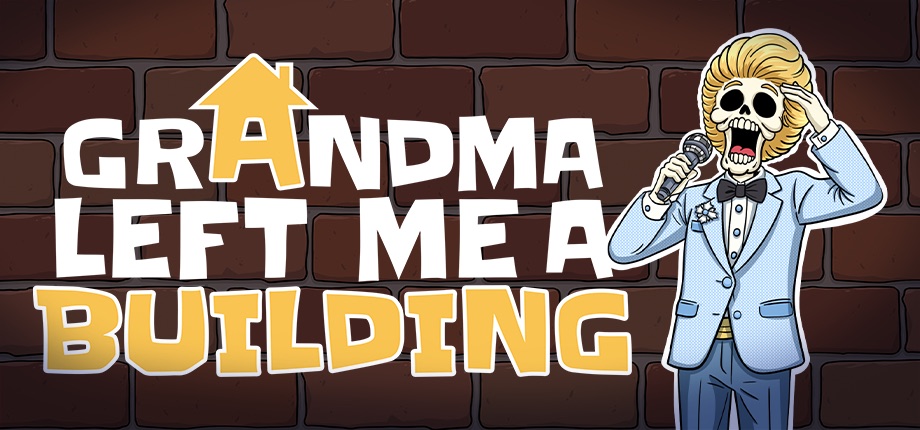
Grandma Left Me a Building is unreleased. Nobody outside the studio has finished it, we have no player data, and nothing here is a claim about how it performs.
What we can say is which strategy we chose. The art is hand-drawn cartoon work. There is no console generation being imitated and no artifact to recreate, so the warmth has to come out of the drawing itself. The nostalgia work then sits in the structure: a crumbling apartment building inherited from a grandmother, 30+ tenants across four social tiers who become the named people around you, an opera singer who bursts into an aria in the elevator among them, and no time pressure to hurry any of it. That matches what the 2006 content analysis found in real nostalgic memories, which is a self at the centre of a place, surrounded by named people, in a story that begins with a ruin. Whether it lands is not something we can assert. We wrote about the premise in inheritance games, and about why an ordinary building is the setting in 10 games set in ordinary places.
Frequently asked questions
Is nostalgia bad for you?
The evidence points the other way. Loneliness and low mood trigger nostalgia, and nostalgia then raises perceived social support, self-regard and positive affect. Treating it as the cause of the distress around it is the specific error that kept it classified as an illness for three centuries.
Do you need to have played the original games to feel nostalgic about a retro-styled game?
No. Media research splits personal nostalgia, about your own past, from historical nostalgia, about a past that predates you. In a 2023 study, students in their early twenties playing an NES-era beat ‘em up produced themes about their parents’ gaming era, and the controller they used made no difference.
Is pixel art required for a game to feel nostalgic?
No, and several of the most nostalgic-feeling recent games are not pixel games. A Short Hike is a 3D Unity game. Nostalgic memories are made of a self at the centre of a remembered place, close relationships and a story that resolves upward, none of which need a particular resolution.
Does the brain research prove anything about game design?
Not yet. The direct neuroimaging literature is six studies, the four fMRI ones tabulated in the review running on samples between 10 and 16 people, and the reviewers themselves flag reverse inference and uncontrolled stimulus valence. It is reasonable evidence that memory and reward regions co-activate. Nobody should be designing from it yet.
Key takeaways
- Nostalgia was a medical diagnosis for two centuries, coined in 1688, blamed on brain fibres, atmospheric pressure and cowbells, and recorded as a cause of death in Union Army records.
- The causal arrow runs backwards from the popular version: distress triggers nostalgia, and nostalgia then restores social connectedness.
- Warmth is literal, not metaphorical: cold rooms increase nostalgia, and nostalgic recall makes people judge a room as warmer and tolerate cold longer.
- Retro styling and nostalgia are separable: Shovel Knight recreates the NES artifact then breaks its resolution, palette and sprite rules, while A Short Hike is a 3D Unity game with no console generation to imitate.
- Two numbers here do not survive checking: the retro gaming market size, where one vendor page prints five contradictory figures for one year, and any strong claim about nostalgia’s neural mechanism.
Grandma Left Me a Building takes the structural route: hand-drawn, with no console generation to imitate. You can wishlist it on Steam.