What Games Get Right (and Wrong) About Being a Landlord
Updated August 3, 2026
Games teach that being a landlord is mostly about people and progression, not property. You screen tenants, match them to units, collect rent, fix what breaks, and reinvest the profit. That loop is honest. What most landlord games quietly skip is the slow, legal, paperwork-heavy reality: vacancies, eviction law, maintenance backlogs, and the fact that every tenant is a person with a life outside your ledger.
I make an apartment-management game, so I spend a lot of time thinking about which parts of the landlord fantasy are fun, which parts are fiction, and which uncomfortable parts are worth keeping. Here is a fair accounting.
What do games get right about being a landlord?
The core loop. Buy something run-down, improve it, raise its value, collect income, reinvest. The Tenants (developed by Ancient Forge Studio, published by Frozen District, Early Access in March 2021, full release October 2022) builds its entire game on that loop: acquire a shabby apartment, redesign the interior with furniture and paint, place a tenant whose taste fits the space, then roll the rent into the next unit. Landlord’s Super (by Minskworks, published by Yogscast Games, full release May 2023 after three years in Early Access, set in a simulated 1980s Britain) gets the grind right in a different way: you take out a dodgy loan, mix your own concrete, and repair the building by hand before a single tenant pays you.
Matching people to places. Good landlord games make tenant preference a mechanic instead of flavour text. A tenant wants a certain rent band, a certain style, certain neighbours. Get the match right and they stay and pay. Get it wrong and they complain, damage the place, or leave. That is a real part of the job, compressed into something you can read in a few seconds.
Cash flow as tension. The better games keep you slightly short of money, so every upgrade is a gamble against next month’s rent. That pressure is one of the truest things about the fantasy.
What do games get wrong about being a landlord?
Eviction is a button. In most games you remove a bad tenant with one click. In reality eviction is a court process that can take weeks or months, with notice periods, filings, and rules that vary by city and country. Games skip it because “fill in the form and wait for a hearing” is not a fun verb. I am deliberately not quoting a timeline for any one country here, because the honest answer for a reader in Istanbul and a reader in Manchester are two different answers, and the only part that holds everywhere is the shape: it is a filing, not a click.
Maintenance is a meter. Real property management is mostly unglamorous upkeep: leaks, boilers, inspections, and contractors who do not show up. Games abstract all of that into a bar you top up, or a repair you buy from a menu.
The law is invisible. A game lets you reject a tenant for any reason you like. Real landlords operate under fair-housing and anti-discrimination rules that forbid exactly that kind of picking. Fair housing is the American name for that rule set, and the equivalent where you live may sit in a completely different statute with different tests, so read this paragraph as a description of the fantasy and not as advice about your own local law. The screening fantasy games sell, sorting applicants freely by vibe, is one of the least realistic things about them.
The landlord is always the hero. Almost every game in the genre puts you behind the desk and treats the tenant as a resource to optimise. The debt fantasy is gentle too. In Animal Crossing, Tom Nook lends you the money for your house at zero percent interest with no due date, so you pay at your own pace. Real mortgages accrue interest and do not wait.
Side by side:
| What games get right | What they get wrong |
|---|---|
| The progression loop: buy something run-down, improve it, raise its value, collect income, reinvest | Eviction as one click, when the real thing is notice periods, filings and a hearing |
| Tenant matching as a mechanic instead of flavour text | Maintenance as a meter you top up, instead of leaks, boilers, inspections and contractors who do not show up |
| Cash-flow tension, so every upgrade is a gamble against next month’s rent | Housing law absent, so you can reject a tenant for any reason you like |
| Tenant preference: rent band, style and neighbours decide whether someone stays and pays | The landlord always being the hero, with the tenant as a resource to optimise |
Which landlord games are worth playing right now?
If you want the renovation-and-rent loop, The Tenants is the closest thing to a dedicated landlord simulator, and it left Early Access in 2022, so it is a finished game. If you want the hands-on, blackly comic grind of doing every repair yourself, Landlord’s Super is the one. If you want the softest possible version, where the landlord is a friendly raccoon and the debt never bites, Animal Crossing is still the comfort pick. For a wider list of building and management games worth your time, I keep a running rundown in the best apartment-building management games.
Why is the landlord fantasy so hard to design?
Every landlord game has to solve one tension: people are messy and spreadsheets are clean. Lean too far toward the spreadsheet and tenants become interchangeable income units, which is efficient and boring. Lean too far toward the people and the numbers stop mattering, which is charming and aimless. The games that work hold both at once, so a tenant is both a line of income and a small character with opinions. If you want to see how that plays out at the level of individual decisions, I wrote up the moment-to-moment choices in an apartment-management strategy guide.
How does Grandma Left Me a Building approach the landlord fantasy?
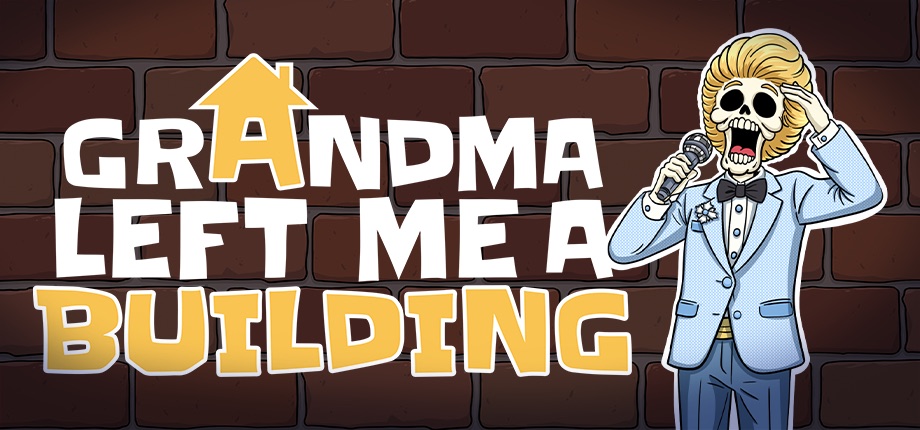
Our debut, Grandma Left Me a Building, is in development, and it leans into the people side on purpose. You inherit a run-down apartment building from your grandmother and restore it, take in odd tenants, and keep mismatched neighbours from clashing. The whole design sits on top of a G.K. Chesterton line we use as the epigraph: “We make our friends; we make our enemies; but God makes our next-door neighbour.”
Concretely, that means:
- 30+ tenants across four social tiers, with trait-based interactions: the right pairings bring peace, the wrong ones bring chaos.
- 300+ character interactions and 100+ unexpected events, so the building keeps surprising you.
- A roster of specific characters rather than income units. An opera singer who bursts into an aria in the elevator. A philosopher who answers every question with “but why?”. An eight-year-old who takes apart anything within reach and reassembles it correctly about a fifth of the time.
- A turn-based day loop: each morning brings rent, events, and tenant requests, then an action phase for decisions, drag-and-drop tenant placement, picking candidates from a realtor, and upgrades from a builder, then a day-end summary as money, happiness, and reputation update.
- 20+ building upgrades, 6 staff types, and reputation-based tenant availability, so a better-run building attracts better tenants.
The design ethos is “starts calm, gets more chaotic as you grow, and the chaos is the comedy,” carried by warm hand-drawn cartoon art in orange, yellow, and cream, with calm lo-fi music playing against the on-screen mess. There is no time pressure, so you plan at your own pace. The tenants are the point, which is the part of the landlord fantasy games most often get right and, we think, the part worth building a whole game around. You can wishlist it on Steam.
Frequently asked questions
Are landlord simulator games realistic?
No, not on the parts that would decide a real case. They model the money loop and tenant taste closely enough to feel true, then quietly delete the paperwork: notice periods, hearings, inspections, housing law. You get the shape of the job with the slow legal parts sanded off.
What is the best landlord game?
Two, depending on which itch you have. The Tenants is the pick for redecorating flats and choosing who moves into them. Landlord’s Super is the pick for doing every repair yourself, mixing concrete in a bleak and very funny simulated 1980s Britain.
Do landlord games simulate eviction?
No, almost none of them model it. Removing a tenant is one click, because the real version happens in a courthouse on the court’s schedule, and waiting for a hearing date offers a game designer nothing to press. The click is a design choice, not an oversight.
Key takeaways
- Games get the progression loop and tenant-matching right, and they compress the real job’s rhythm into something you can read in seconds.
- Games get eviction, maintenance, and housing law wrong, usually by omission, because the realistic versions are slow and unfun.
- Worth playing now: The Tenants for renovation, Landlord’s Super for hands-on repair, Animal Crossing for the gentle debt fantasy.
- Grandma Left Me a Building, in development, treats tenants as characters first and runs turn-based with no time pressure.