A Short History of Management Sim Games
Updated August 3, 2026
Management sim games started on the Intellivision in 1981 with Mattel’s Utopia, then took shape through Maxis’s SimCity (1989) and Bullfrog’s Theme Park (1994) and Theme Hospital (1997). RollerCoaster Tycoon (1999) pushed the detail, and Two Point Hospital (2018) led the modern revival. Here is the through-line, and where our own apartment sim fits.
What is a management sim game?
A management sim is a game where you run a system instead of a character: you lay out the space, place the people, spend money and time you never have enough of, then watch the system push back. There is usually no hero to steer, and often no win condition to reach.
What was the first management sim game?
Utopia (Mattel, 1981) is the usual pick for the first management sim. Designed by Don Daglow for the Intellivision, it put two players in charge of rival islands, spending a budget on farms, schools, hospitals and fishing boats while weather and rebels worked against them. It is often credited as an early god game and a precursor to real-time strategy, which is why so many genre histories start here.
It set a template the whole genre kept: you watch a system, nudge it, and read the results, instead of steering a single hero through a plot.
How did SimCity define the management sim?
SimCity (Maxis, 1989), designed by Will Wright, is where the genre found its identity. It had no win condition and no score to beat. You zoned land, laid roads and power, then watched a simulated population move in, complain, and grow. The loop was the reward.
That was the big shift: in SimCity you run a system, not a character. The map is the protagonist, and your job is to keep a lot of moving parts in a workable balance. Almost every management sim since owes something to that open-ended toy design, and it is the direct ancestor of the tycoon and city-builder families that followed.
What did Bullfrog add with Theme Park and Theme Hospital?
The British studio Bullfrog, co-founded by Peter Molyneux, gave the genre comedy and character. Theme Park (1994) let you build and run an amusement park down to the salt content of the fries, with visitors who got sick, queued, and rioted when a ride broke. Theme Hospital (1997) did the same for a deliberately absurd hospital, full of invented illnesses and announcements piped over the tannoy.
Bullfrog’s contribution was tone. These were systems you could laugh at, where the humour came out of watching your own decisions go sideways. That lineage matters later, because the studio that revived the genre came straight out of this team.
Why did RollerCoaster Tycoon matter?
RollerCoaster Tycoon (1999), largely programmed in assembly by Chris Sawyer, took the tycoon idea to an extreme of detail. You laid out individual track pieces, tuned ride intensity, priced tickets and umbrellas, and tracked each guest’s thoughts as they wandered the park. It was a commercial hit and cemented “Tycoon” as a genre label that publishers stamped on management games for years.
Where SimCity abstracted a city, RollerCoaster Tycoon made you feel the bolts. It proved the audience would happily sit with deep, fiddly systems as long as the feedback stayed legible.
What brought the management sim back?
After the tycoon boom cooled in the 2000s, the genre’s biggest modern moment came from Two Point Hospital (Two Point Studios, released in August 2018). Two Point Studios was founded in 2016 by Mark Webley and Gary Carr, who had worked on Theme Hospital at Bullfrog. Their game was an open spiritual successor: the same comic-hospital premise, rebuilt with modern tools, and it kicked off a wider Two Point County series.
The revival was not one game. Alongside it, Cities: Skylines (2015) rebuilt the city-builder, Frostpunk (2018) added survival stakes, and Steam filled with smaller sims covering everything from theme parks to spacecraft. The genre had gone from a handful of studios to something indies could take in any direction.
Where does a game like Grandma Left Me a Building fit?
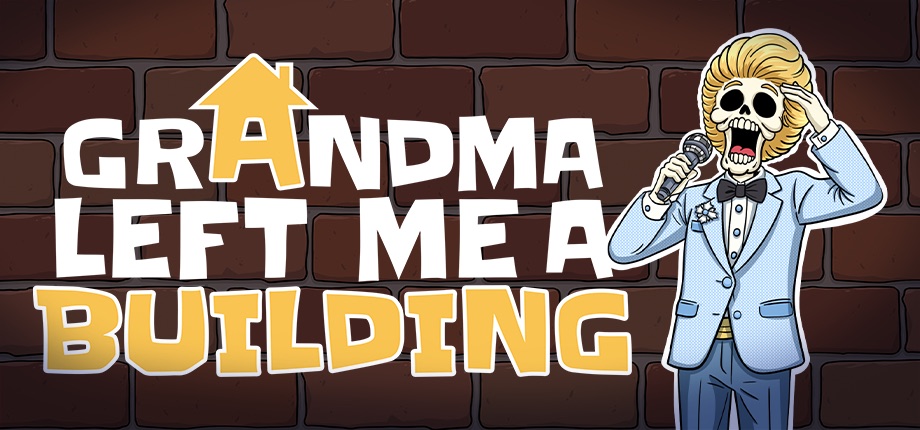
This is the part of the history a small studio can actually add to. Our debut, Grandma Left Me a Building, is a cozy, comic apartment-management sim: you inherit a run-down building from your grandmother and restore it, taking in 30+ tenants across four social tiers, keeping mismatched neighbours from clashing, and reinvesting rent into 20+ upgrades.
It inherits SimCity’s idea of a system you tend and Bullfrog’s idea that the comedy comes from watching that system misbehave. The twist is scale and cast: instead of a city or a hospital, the “map” is one building, and the drama comes from specific characters (an opera singer who bursts into an aria in the elevator, an eight-year-old who takes anything apart and reassembles it correctly about a fifth of the time). It runs on a turn-based day loop, so there is no time pressure, but there is a real economy of money, happiness and reputation with genuine stakes. That mix of legible systems and character-driven chaos is what we think the genre does best, and it is where we are trying to add something. If you want the deeper design argument, we wrote about what makes a management sim fun and how our sim compares to Stardew Valley and Two Point Hospital.
Management sim timeline: 1981 to 2018
The same through-line as a table, with the year each landmark arrived and the one thing it added.
| Year | Game | Studio | What it introduced |
|---|---|---|---|
| 1981 | Utopia | Mattel | The first management sim |
| 1989 | SimCity | Maxis | No win condition, tend a system |
| 1994 | Theme Park | Bullfrog | Guests and comedy |
| 1997 | Theme Hospital | Bullfrog | Sardonic tone |
| 1999 | RollerCoaster Tycoon | Chris Sawyer | Extreme legible detail |
| 2015 | Cities: Skylines | Colossal Order | City-builder revival |
| 2018 | Two Point Hospital | Two Point Studios | Modern comic revival |
Frequently asked questions
Do management sims have a win condition?
No, most of them do not. SimCity shipped without one in 1989 and the genre followed: the payoff is keeping a system running rather than reaching an ending, so a session stops when you decide it has.
Did the people behind Theme Hospital make Two Point Hospital?
Yes, two of them. Mark Webley and Gary Carr worked on Theme Hospital at Bullfrog before founding Two Point Studios in 2016, so the resemblance is deliberate: their game is an open spiritual successor rather than an official sequel.
Are tycoon games the same as management sims?
Yes, mostly. Tycoon started as a label rather than a separate genre: RollerCoaster Tycoon made it stick in 1999, and publishers spent years stamping it on management games of all kinds.
Key takeaways
- Origin: Utopia (Mattel, 1981) is the usual pick for the first management sim, an Intellivision game by Don Daglow.
- Genre defined: SimCity (Maxis, 1989) established the open-ended, no-win-condition sim built around tending a system.
- Character and comedy: Bullfrog’s Theme Park (1994) and Theme Hospital (1997) added humour and personality.
- Deep detail: RollerCoaster Tycoon (1999) proved players would embrace very deep, legible systems.
- Modern revival: Two Point Hospital (2018), from ex-Bullfrog developers, brought the comic sim back and opened the door for indies.
For a wider view of the genre today, see our roundup of the best apartment and building management games, or wishlist Grandma Left Me a Building on Steam.