What Makes a Good Management Sim Fun?
Updated August 3, 2026
A good management sim is fun when its numbers stand for something you care about. The best ones give you meaningful choices with visible tradeoffs, feedback you can read at a glance, a difficulty curve that keeps teaching, and spaces or characters with personality. A spreadsheet with a win screen falls flat; stakes, legibility, and surprise are what turn accounting into play.
A management sim is a game where you run a system instead of a character: you lay out the space, place the people, spend money and time you never have enough of, then watch the system push back.
I design one of these for a living, so this is a working designer’s view of the craft rather than a ranking. Below are the five things I keep coming back to, each grounded in a real game that gets it right.
What separates a good management sim from a spreadsheet?
The line is whether your inputs produce interesting consequences. In a dull management game you move a number up and a related number moves up too, forever. You are just doing data entry with nicer fonts. In a good one, every lever pulls against another lever, so the interesting question is which cost you are willing to pay.
Two Point Hospital (Two Point Studios, 2018, published by Sega) is a clean example. Build another treatment room and you spend cash, floor space, and staff attention all at once, and each of those was already scarce. Every new room forces you to price three scarce things against each other and commit. That tension is the actual gameplay, and the hospital-comedy skin just makes the math pleasant to look at.
So the first test of a management sim is simple: does every choice cost you something you also wanted to keep?
Do the best management sims need real stakes?
They need consequences, which is a different thing from punishment. RimWorld (Tynan Sylvester, Ludeon Studios, 1.0 released 17 October 2018) is a colony sim where a heat wave, a raid, or one colonist’s breakdown can unravel a run. Those stakes are what make a good day feel earned. Take them away and the systems stop meaning anything, because nothing you do can go wrong.
That said, stakes do not have to mean a harsh timer or a sudden game-over. Project Highrise (SomaSim, 2016) keeps the pressure economic: tenants leave if their needs go unmet, so your income quietly erodes when you neglect the building. The threat is real, but it arrives as a slope you can see coming rather than a cliff. There is a psychology to why unhurried games still hold us, which I dug into in why cozy games are so relaxing.
The design lesson is that a management sim needs a way to lose, even a slow one, or winning has no flavour.
Why do characters matter more than columns?
Numbers tell you what is happening; characters make you care that it is happening. Two Point Hospital gives its patients absurd named illnesses and lets them wander your corridors, so a staffing shortfall reads as a visible crowd of unhappy people instead of a red cell in a table. RimWorld goes further and generates backstories, grudges, and friendships, so a resource crisis is also a story about specific colonists you have come to know.
This is the part I care about most in my own work. When a management sim attaches its systems to people, the same event that would be a spreadsheet update becomes a small drama you want to resolve. The goal is to make routine upkeep feel engaging rather than like a chore, and personality is the cheapest, strongest way to get there. For a longer comparison of how different studios handle this, see how three cozy management games stack up.
How does difficulty keep a management sim fun?
By teaching. A good management game introduces one new system at a time and lets each settle before the next arrives, so complexity feels like growing fluency. Two Point Hospital and Project Highrise both open with a few clear levers and layer in staff, upkeep, and reputation gradually.
The failure mode is a game that dumps every system on you at once, or one that never adds a second idea after the first hour. The sweet spot is a steady drip of new decisions, each building on tools you already understand. If you want the player-side version of this, our apartment management strategy guide breaks down how those layers compound in practice.
How does Grandma Left Me a Building apply this?
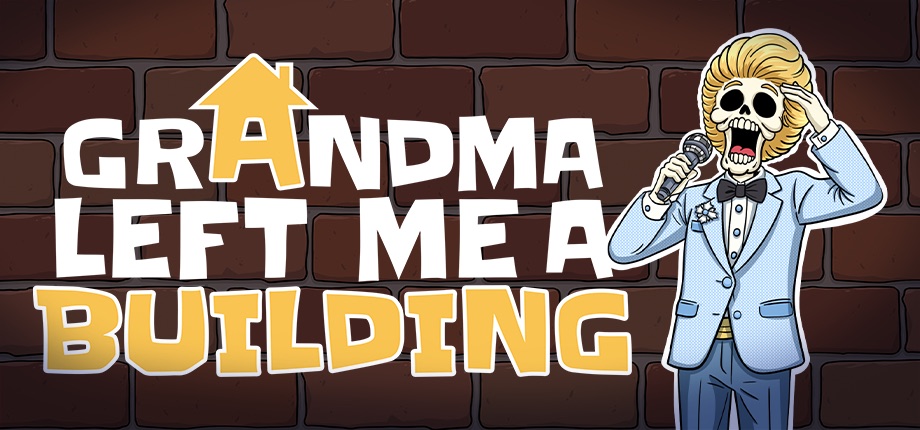
Grandma Left Me a Building, our in-development apartment sim, is where I test all of this. The premise is an inheritance: your grandmother leaves you a run-down building, and you restore it, take in tenants, and keep the peace. The design brief I keep returning to is that the systems should never read as a table.
That is why the game runs on more than 30 tenants across four social tiers, each with traits that decide who they can live next to. Pair an opera singer who bursts into an aria in the elevator with the wrong neighbour and you get chaos; pair them well and you get calm. There are 300+ character interactions, 100+ unexpected events, and a turn-based day loop with no time pressure, so the drama comes from your decisions rather than from a clock. It starts calm and gets more chaotic as you grow, and the chaos is the comedy. You can read more on our design devlog or wishlist it on Steam. For a wider tour of the genre, we also rounded up the best building management games.
Frequently asked questions
Do management sims need a fail state to be fun?
Yes, but a gentle one counts. Consequences matter more than punishment: an income that slowly erodes when you neglect people gives your good days weight, while a game you cannot lose turns its systems into decoration.
Can a management sim be relaxing and still have real stakes?
Yes. Pressure does not have to arrive as a countdown: a slow economic slide, or a turn-based loop with no clock, still asks you to pay for careless decisions while leaving you room to think.
How many new systems should a management sim teach at once?
One. Complexity feels like growing fluency when each mechanic gets time to settle before the next one lands, and it feels like homework when a game hands you staffing, upkeep and reputation in the same hour.
TL;DR: what makes a good management sim fun
| Principle | What it looks like in play | Game that nails it |
|---|---|---|
| Meaningful tradeoffs | Every new room costs cash, floor space and staff attention at once | Two Point Hospital |
| Real consequences | Tenants leave when their needs go unmet, so your income quietly erodes | Project Highrise |
| Personality over tables | Generated backstories, grudges and friendships turn a resource crisis into a story about specific colonists | RimWorld |
| Teaching difficulty | A few clear levers at the start, then staff, upkeep and reputation layered in one at a time | Two Point Hospital and Project Highrise |
| Legible feedback | A staffing shortfall reads as a crowd of unhappy people, not a red cell in a table | Two Point Hospital |