How We Designed the Tenants of Grandma Left Me a Building
Updated August 3, 2026
Every tenant in Grandma Left Me a Building is defined as data before anything else: five personality traits of their own, four traits they like in a neighbor, and five they cannot stand. Compatibility is not scripted, it emerges from those overlaps. This devlog walks through the real trait system behind our 30+ planned tenants.
A trait-based compatibility system gives each character a set of self traits plus liked and disliked traits, then derives every relationship from overlaps instead of scripting pairs. It scales because content grows with the trait pool, not the cast.
The system in numbers
- Trait pool: 46 traits, split into 16 negative, 14 neutral, and 16 positive.
- Per tenant: 5 self traits, 4 liked traits, 5 disliked traits.
- Cast: 30+ planned tenants, 29 of them fully specified so far.
- Social tiers: 4.
- Character interactions: 300+.
- Special traits: 6 of the 46, flagged as story hooks.
Why did we build tenants as trait bundles?
Grandma Left Me a Building is our upcoming cozy apartment management sim, and the cast is the whole point: 30+ unique tenants and 300+ character interactions. Scripting every relationship pair by pair would collapse under its own weight, so we wrote a shared vocabulary instead. Our design database holds 46 traits, split into 16 negative, 14 neutral, and 16 positive. Every tenant carries exactly five of them, and as of this writing 29 tenants are fully specified against that pool.
The trait tooltips are written as building gossip, because that is where the traits live in the fiction. Night Owl: “Hasn’t seen sunlight in 4 months, vitamin D levels critically low.” Whiny: “If you’re the type who tries to keep everyone happy, welcome to your final boss.” Chef: “That amazing smell in the hallway at 7 PM? That’s them. If they knock, they’ve brought a plate.” Each one tells you the mechanical consequence in character: who makes noise, who complains, who shows up with food. The thinking that led here started in how we designed Grandma Left Me a Building, the concept devlog this post continues.
What is actually on a tenant’s sheet?
Take The Rattlebangs, a Tier 1 goblin family of three. Dad counts every penny, mom runs the chaos, and Gizmo, their eight-year-old, takes apart everything she sees and gets it back together about 20% of the time. Their self traits: Chaotic, Loud, Sunshine, Good Vibes, Social. Rent range 16 to 24, a 75-day contract, zero demands about floors. Their lease fine print reads: “The Landlord accepts that dismantling of fixtures by minors qualifies as educational activity, not property damage.”
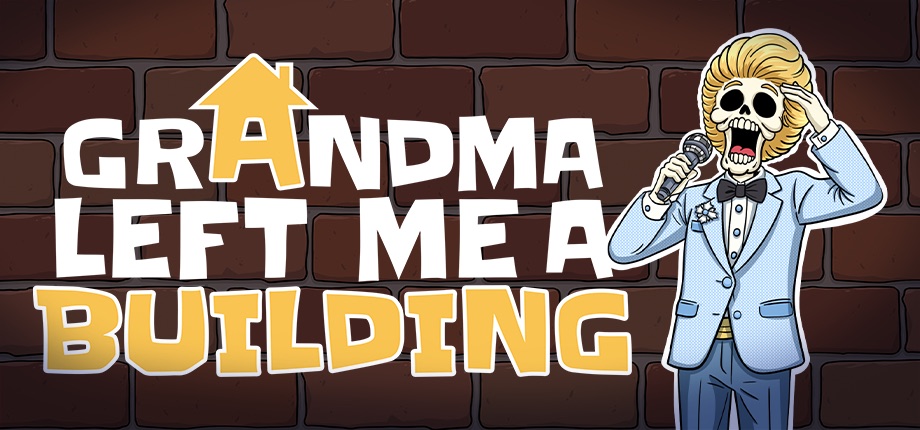
Now Enzo DaCapo, Tier 4: a skeleton crooner 142 years into a platinum-record career, voice still pristine. Self traits: Loud, Show-off, The Rockstar, Charismatic, Good Vibes. Rent range 80 to 95, a 40-day contract, and he refuses anything below the fourth floor. His fine print: “The Landlord waives the right to file noise complaints against performances the Tenant deems ‘legendary.’” Same data structure, opposite tenant.
| Field | The Rattlebangs | Enzo DaCapo |
|---|---|---|
| Tier | Tier 1 | Tier 4 |
| Self traits | Chaotic, Loud, Sunshine, Good Vibes, Social | Loud, Show-off, The Rockstar, Charismatic, Good Vibes |
| Liked traits | unannounced | unannounced |
| Disliked traits | unannounced | unannounced |
| Rent range | 16 to 24 | 80 to 95 |
| Contract length | 75 days | 40 days |
| Floor demand | None | Fourth floor and above |
The liked and disliked lists for these two are unannounced; both sheets carry four liked traits and five disliked ones like every other tenant.
How does compatibility emerge from liked and disliked traits?
Every tenant also lists four traits they appreciate in neighbors and five they cannot live near. Professor Whynot, our yeti philosophy teacher who answers every answer with “but why?”, is Weird, Messy, Intellectual, Wise, and Zen. He likes Zen, Inspiring, Boy Scout, and Artist neighbors; he dislikes Loud, Chaotic, Show-off, Fanatic, and Snob. Check Enzo’s sheet again: Loud and Show-off are two of his five self traits. Put the crooner one wall away from the philosopher and the friction generates itself, with no bespoke script for that pair anywhere in the game.
It works in the other direction too. Bronco Mahalle is a neighborhood tough-guy centaur who trash-talks everyone from his doorstep and secretly feeds stray cats: Fur Parent is on his sheet, and it is also on his liked list. Daisy Petalwind, a flower person who claims to talk to the universe, is a Fur Parent herself. On paper the two share nothing. In the hallway they bond over the strays.
Why are wrong pairings the comedy engine?
We could have tuned the tenant pool so conflicts rarely surface. We went the other way, because a management sim needs tension, and in a cozy one that tension should land as comedy rather than punishment. We dug into that balance in what makes a management sim fun. The setup is always yours to make: Blaze Charcoal is a man made of fire who grills burgers for a living, carrying Hothead, Messy, and Loud. Our robot-bodied nurse, a brain floating in a glass jar and obsessed with hygiene, dislikes Filthy, Messy, Chaotic, Party Animal, and Loud. Rent to both and you have written the sitcom yourself.
Six of the 46 traits are flagged special: Grill Maniac, DIY Maniac, The Rockstar, The Influencer, The Investor, and The Planner. Their tooltips point past daily friction toward bigger stories. Grill Maniac’s warns: “One day they might knock with a big plan.” Odd neighbors with odd agendas are a genre tradition we love; we collected our favorites in the weirdest NPCs in cozy games.
What do the four social tiers actually change?
The cast spans 4 social tiers: the tier sets the deal, the traits set the person. Tier 1 tenants like the Rattlebangs pay 16 to 24 in rent, sign 75-day contracts, and expect nothing from the building. Tier 4 tenants like Enzo pay 80 to 95 on 40-day contracts and demand the top floors. Higher tiers mean more income and more expectations, and the trade never comes free, because tenant happiness drives your income and your reputation decides which tenants appear in your pool at all.
Tenants arrive through a broker with a three-day window, and every character has three escalating pitch lines, one per day. Day one for the Rattlebangs: “Near-zero expectations, perfect if you want cheap tenants.” Day three: “Last day. Someone else is interested.” Whether you jump on Enzo or hold out for someone calmer is the daily texture of the game.
Where does the hand-drawn art come in?
Every tenant so far is drawn by hand by our 2D artist, Berkay Özer, in the game’s cartoon style. The character sheet is the reference the art works from: the trait bundle, the description, the lease fine print, and the broker’s pitch lines all exist in our design database as one record per tenant. That is a big part of why the cast reads as distinct at a glance. An octopus bodybuilder lifting eight dumbbells, a living sticky note that leaves reminders on everything, a retired sumo champion who floats but keeps his feet on the ground: the data made them different first, and the drawings make you recognize them from across the hallway.
Key takeaways
- A tenant in Grandma Left Me a Building is 5 self traits, 4 liked traits, and 5 disliked traits, drawn from a shared pool of 46 (16 negative, 14 neutral, 16 positive).
- Compatibility and conflict come from overlap checks between neighbors, which is how 30+ tenants support 300+ character interactions without pair-by-pair scripting.
- Bad pairings are content: renting a fire-bodied grill cook next to a hygiene-obsessed robot nurse is a joke you set up yourself.
- The 4 social tiers trade income for demands: rent of 16 to 24 with zero expectations at Tier 1, 80 to 95 with top-floor demands at Tier 4.
- Each finished tenant is hand-drawn by Berkay Özer from a completed character sheet; the full feature rundown is on the Grandma Left Me a Building press page.
If you want to meet the Rattlebangs when the building opens, wishlist Grandma Left Me a Building on Steam.