Four Jobs: Games Where You Manage a Building
The 30-second answer
Search this phrase in a US locale and page one comes back about cities. The results I can point at are a city-builder roundup, the GamesRadar list, two Wikipedia definitions (construction and management simulation and city-building game), and a list of open-world games where you build yourself a house. Running a city and running a building are different jobs, and putting up a house you then walk away from is a third job again. None of those four sorted anything by the question that decides which game you actually want: what is inside the building, and how long it stays.
The best single answer is Project Highrise, because the structure is the opponent: power, water, lifts and floor layout are what beat you, not a rival. Buy Tavern Master if you want one room full of customers and a working business by the end of an evening, and The Tenants if the part you want is choosing the person who signs the lease.
Updated August 2026.
Four jobs, one building
A game where you manage a building is one where a single structure’s rooms, occupants and rent are the whole system you tune: you decide what each room is for, who is in it, and what it needs next.
The camera does not have to stay indoors for that to be the job. Half the games below send you out of the front door at some point, and the building is still the thing you tune when you come back.
Four different jobs hide inside that sentence, and which one you want is settled by one question: how long does the occupant stay? A guest who checks out in the morning, a customer who leaves in twenty minutes and a tenant who signs for a year produce three different games out of the same floor plan. The fourth job puts the structure itself at the centre and leaves the occupant as traffic.
| What you manage | How long the occupant stays | What you spend your time tuning | What going wrong looks like |
|---|---|---|---|
| Rooms | One night | Room mix, staff shifts, guest rating | Empty beds, and a rating that keeps the next guest away |
| Tables | Twenty minutes | Seats, menu, how fast the order arrives | A queue that gives up and walks out |
| Tenants | Months | Who you accept, the fit-out, the rent | One unit nobody wants, and neighbours who cannot stand each other |
| Floors | Years | Utilities, lifts, what goes on which floor | The building stops working long before the money runs out |
The third row has its own name and its own page. An apartment management game puts you in charge of a building: you place tenants, meet their needs, collect rent, and reinvest it to grow the property. For the ladder that runs from a single house up to a whole city, property management games sorted by scale is the page that covers it.
The ten in one table
Eleven games get a write-up below and ten of them are in this table. Nine of the ten carry figures. Dream House Days DX missed the August sweep, so its price and review cells say so, and Hotel Architect missed it too, which is why it has no row at all. Neither of those two is counted in a line here that compares a price or a score.
| Game | What you manage | Regular price (as of August 2026) | Steam reviews (as of August 2026) | Platforms |
|---|---|---|---|---|
| Hotel Magnate | Rooms and guest ratings | $19.99 | 491 at 58.5% positive | Windows, macOS, Linux |
| Two Point Hospital | Wards, and then a new site | $29.99 | 34,881 at 92.0% positive | Windows, macOS, Linux |
| Tavern Master | Tables, drinks and staff | $14.99 | 13,237 at 92.1% positive | Windows, macOS, Linux |
| Supermarket Simulator | Shelves and the till | $19.99 | 83,722 at 92.1% positive | Windows, macOS |
| The Palace on the Hill | A tea shop | $19.99 | 109 at 95.4% positive | Windows, macOS |
| The Tenants | Who moves in, and the fit-out | $19.99 | 7,761 at 78.9% positive | Windows |
| Landlord’s Super | The walls first, the tenants second | $19.99 | 1,707 at 80.6% positive | Windows |
| Project Highrise | Floors, wiring and lifts | $19.99 | 4,811 at 84.9% positive | Windows, macOS |
| Dream House Days DX | Floors, and who moves into them | not in this pass | not in this pass | Windows |
| Hokko Life | Other people’s houses | $19.99 | 2,666 at 66.4% positive | Windows |
Prices are the regular list price, so a game running a discount when you look will read lower. Every price, percentage and review count on this page was read from the Steam store on 20 August 2026.
Rooms: the occupant is gone by morning
Hotel Magnate
You start “with nothing but dreams and an empty lot”, and the store page then lets you build for whoever you want to attract: “restaurants for the foodies, day spas for the vacationers, and conference halls for the workaholics”. You hire employees to clean, serve, manage and maintain, and the same page is explicit that better facilities and ratings pull wealthier clientele, so your build order is also your guest list.
Of the two hotel games here it is the one I have numbers for, and the numbers are the reason to read before you spend: 58.5% positive across 491 reviews (as of August 2026), the lowest score in the table above on the second-smallest sample in it.
Hotel Architect
14 May 2026 is the release date on its Steam page. It is released, not in Early Access, so the version on sale there is the finished game. Pathos Interactive and Wired Productions describe a career mode and a sandbox mode where you “design, build, and manage grand hotels around the world” and either “rejuvenate rundown buildings” or start from an empty plot. It is Windows only.
That release line and that platform line are the only facts in this section the 20 August store sweep does not cover. If the hotel job is the one you want and Hotel Magnate’s score has put you off, go and read the store page for yourself: it carries a public review score that this page’s sweep never captured, so the silence here is a hole in my evidence.
Two Point Hospital
Buy this one if you want the room-and-staff job on a score that tens of thousands of reviews have already settled, and you do not mind that the building changes under you. Each level hands you a new hospital in a new town and grades you on it, and even inside one level the store page tells you: “Expand your hospital to multiple buildings as you look to get as many patients through the door as possible.” The structure is the one thing you never keep. What you do inside it is exactly the job: place the wards, hire the staff, keep the queue moving, and cure a county’s worth of peculiar illnesses. The rest of that shelf is in games like Two Point Hospital.
Tables: the occupant is gone in twenty minutes
Tavern Master
A tavern here starts as “a very small room, couple of benches and tables” and ends as one “with a kitchen, rooms for guests, group of loyal staff”, which is the whole arc as its store page lays it out. Two details make it more than a decorating game: musicians are hired because they “make customers have more patience while waiting for a drink”, and special events bring in customers with specific food and drink requirements who “will come in the morning and stay all day”. Seat count, light sources near the tables and how fast your staff can reach a guest are the real dials.
It is the fastest game here to go from an empty room to a business that runs itself, and at $14.99 (as of August 2026) it is the cheapest of the four games in the table above that score over 90% positive. If it lands, games like Tavern Master continues from there.
Supermarket Simulator
83,722 reviews (as of August 2026) is more than every other game on this page put together, and they were earned doing the twenty-minute-occupant job with a till where the table would be. It is played in first person, down at shelf height, and the store page lists the loop plainly: “Stock shelves, set your prices, take payments, hire staff, expand your store, handle shoplifters, and design your layout.” You order stock on an in-game computer, unpack it, and decide what sits on which shelf.
Buy it if the till is the part you want and the building around it can stay a plain box. If the shop appeals and the building is incidental, cozy shop management games is the better shelf to browse.
The Palace on the Hill
The palace in the title is a ruin you explore. The building you actually run is a tea shop, and the store page lists “Indian cooking and tea shop management” alongside “15th century Indian royal palace exploration”, hand-painted watercolour art, and a cast of over 25 characters in a fictional 1990s rural India. The management side is small. The story is what the game spends its time on.
Read the sample size before you read the percentage. It shows 95.4% positive across 109 reviews (as of August 2026), the highest score in the table above and by a long way the smallest sample behind any score here, so treat that percentage as an early signal. Buy it for the story and take the tea shop as the part that gives your day a shape. Games like The Palace on the Hill picks up the rest of that shelf.
Tenants: the occupant stays and has opinions
The Tenants
Pick the applicant first, then build the flat around them. Its store page asks whether you will “design your apartment for a group of gamer friends or an aspiring musician looking for a new home”, and that matching problem is the game: the fit-out you choose changes who will pay for the unit. It is the only game here where the occupant is a person with preferences and you choose them from a list of applicants. Annoyed neighbours and police involvement arrive as interruptions you clean up after.
One thing worth knowing before you buy: the game changed hands in 2026. A Steam announcement dated 17 June 2026, posted on the Hotel Galactic news page rather than this game’s own, says EndGameLoop Games took over Hotel Galactic and acquired “the rights to The Tenants” with it. If you are buying on the promise of future patches, that is the company to watch.
Buy it if picking the person is the part you want, and go in knowing two things: it is the lowest scoring of the three games I point at in the opening, and the units are scattered across a city, one flat at a time. Games like The Tenants splits that shelf by which half of the job you liked.
Landlord’s Super
“Order supplies! Mix your own cement! Assemble scaffolding to reach high places! Build walls brick by brick!” The store page opens on construction verbs: the trowel comes long before the lease, and the landlord half is the thinner half. The framing around it is “take a dodgy loan, restore a property, move in the locals, attend to their grievances, then celebrate with a pint”, set in a fictional English county in the 1980s, and the same page tells you to plan around “the time of day, weather, seasons, world events, union interference and your own well-being”.
Buy it for the building work. On the table above it sits mid-table on score and near the bottom on sample size, so the reception is thinner evidence than the bigger games here give you.
Floors: the structure outlasts everyone in it
Project Highrise
“A skyscraper is more than just steel and glass, it’s an intricate ecosystem, full of people that live and work in the building”, says the store page, and the job it hands you is to coordinate “every wall and wire, every office and apartment”. Your occupants are companies as often as households, which is why the utilities matter: offices, restaurants, retail and apartments all want different services, and the lift shafts decide whether anyone can reach them at nine in the morning.
This is the top pick, because the building itself argues back and nothing else here makes the structure this hard to satisfy. Of the two games in this section it is the one this page has numbers for. Games like Project Highrise covers the range from hardcore to cozy if this is the rung you want.
Dream House Days DX
Kairosoft put this one on Steam on 27 March 2022, and its store page opens on the double job: “You play both architect and landlord in this fanciful new sim”. The architect half is what pays the landlord half, because the right pair of objects in one room powers that room up and raises the rent it charges. An HDTV next to a game console makes a game room, a grand piano next to a painting makes a fine arts room, and rising up the rankings of real estate fame is what pulls in celebrity tenants “ranging from hit singers to soccer stars”.
It holds the floors job with one foot on the tenants row: the building is the thing you keep extending, and the residents stay long enough to come to you for guidance on romance and careers. Buy it if you want the building job from Kairosoft’s side of the genre rather than the wiring-diagram side, and go and read its store page for a review score, because it sat outside the August sweep and this page has none for it.
The outlier: a building and no business
One game on this page hands you a building to shape and nobody inside it who owes you anything. There is no lease, no bill and no occupancy figure, and that gap is worth checking before you buy, because it changes what the whole loop is for.
Hokko Life
You “step off the train” into the town, take over “the dusty old workshop”, and from there you design, build and decorate homes for the villagers, per its store page. The design table lets you build furniture from shapes and materials, and you can paint wallpaper, flooring and clothing. There is no rent, no occupancy, and no one you can refuse.
Buy it for the making. The furniture editor is the deepest thing in it, and the villagers are who you decorate for. It also carries the second-lowest score in the table above, so the missing business is not the only thing to weigh. If the creative half is what pulled you here, games like Hokko Life is the right follow-up.
One from us, sitting beside the list
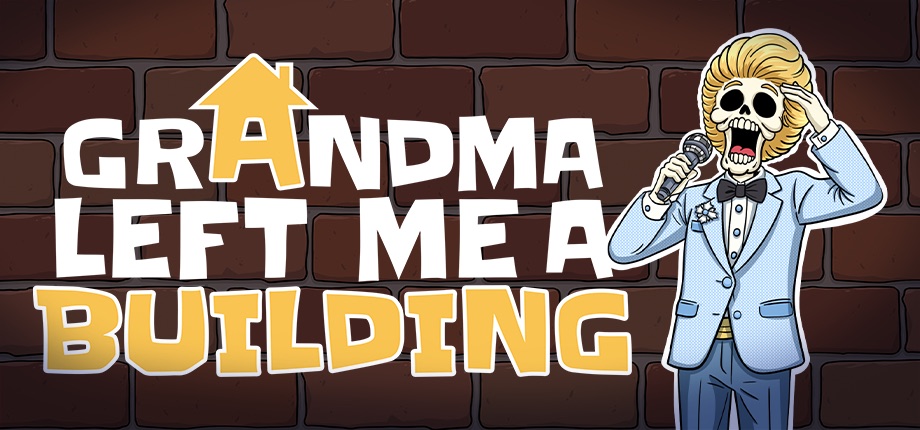
Our own debut, Grandma Left Me a Building, sits beside this list rather than on it, on the tenants row. You inherit a run-down building from your grandmother, find tenants, collect rent, hire staff and upgrade the place. Tenant placement is drag-and-drop and income moves with how happy the residents are, so where somebody lives and who they live beside is a single decision. The pool of people willing to move in shifts with the building’s reputation, so who applies later is a consequence of how you ran the building earlier. The cast includes a midnight guitar-shredding elf, a philosophy-lecturing yeti and an opera singer who bursts into an aria in the elevator, and keeping mismatched neighbours apart is the job, because the clashes run off tenant traits.
What I cannot tell you is whether that holds up across a long game. It is unreleased, due 10 November 2026 (as of August 2026) on Steam for Windows and macOS, so there is nothing to point at yet. The wider shelf it belongs to is apartment building management games.
Quick answers
Is there a game here where you never leave the building? Yes, four of the ten in the table. Project Highrise, Tavern Master, Supermarket Simulator and Hotel Magnate all keep the whole game inside one structure that you expand outwards from where you started. Five send you out: The Tenants spreads across a city unit by unit, Two Point Hospital hands you a new site every level, Landlord’s Super sends you into an open county to buy your bricks, Hokko Life gives you a whole village to furnish, and The Palace on the Hill takes you out of the tea shop to explore the ruin. Dream House Days DX is the tenth, and I cannot sort it: its store page describes the rooms and the tenants and never says where the camera goes.
How many of these run on macOS? Six of the ten in the table. The four exceptions are The Tenants, Landlord’s Super, Dream House Days DX and Hokko Life, all Windows only, and Hotel Architect is Windows only as well. Three of the ten also ship for Linux: Hotel Magnate, Tavern Master and Two Point Hospital.
What is the cheapest way to find out whether this genre suits me? One game. Tavern Master carries the lowest of the nine prices this page can quote, and it is also the quickest of them to put a working business in front of you, which is the thing you are trying to find out.
Does Two Point Hospital count as managing a building? No. Its own store page tells you to expand a hospital across multiple buildings, and every level starts you on a fresh site, so what carries over between levels is your skill and never the property. The room-and-staff job inside it is real, which is why it is on the page at all.
Prices, scores, review counts and platform lists all drift, and everything quoted above is one day’s reading of the Steam store, 20 August 2026. Hotel Architect and Dream House Days DX were not in that sweep, which is why this page carries no price and no review count for either. The search results I describe at the top are a separate US-locale read that sits outside that sweep, and a results page moves faster than a store page does.